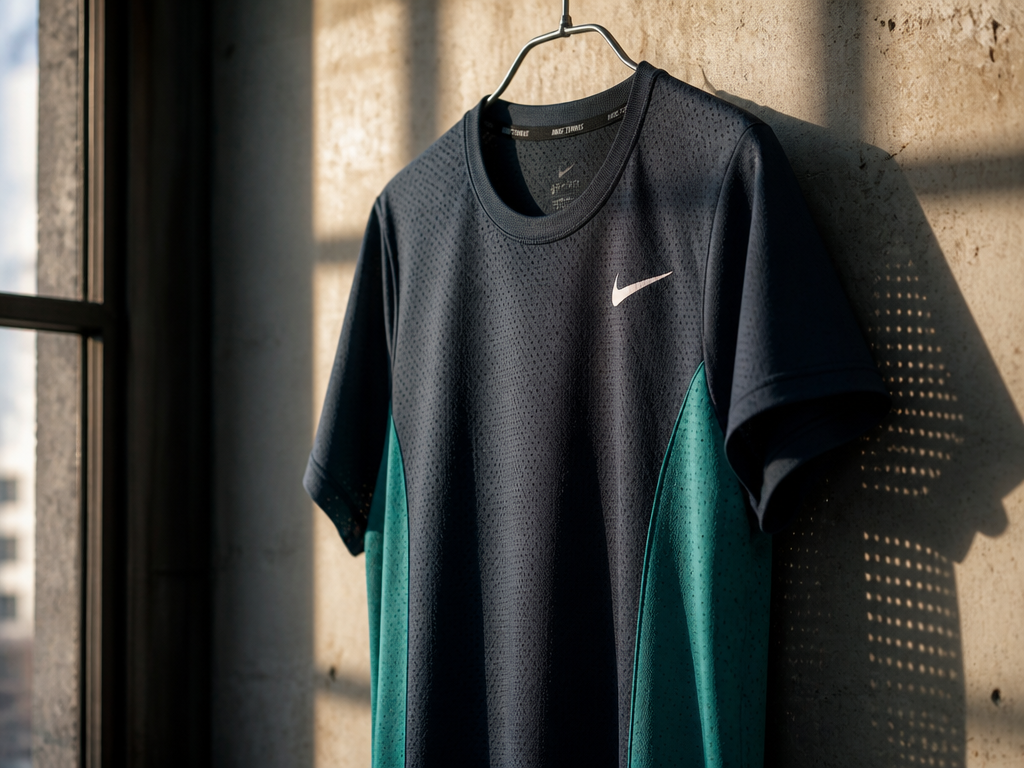
adidas structures its tennis year around two weeks in Queens, and the adidas New York Collection 2026 is the brand's annual argument for what a hard-court summer should look like. It lands in the run-up to the US Open, as it does every year, wrapped in a nineties-city reference and a cooling-technology claim. Our verdict: buy it for the cut and the palette, which are the real product, and read the cooling language as comfort engineering rather than physiology — the belief that a ventilated tennis shirt lowers your working body temperature has a source, and the source is thinner than the belief.
That is the review in a paragraph. The rest is how we got there, and how the sport came to believe the cooling story in the first place.
How we evaluated
We have not worn this collection and we measured nothing. What we did was read, and weigh. Four inputs: adidas's own product and technology descriptions on adidas.com; the fibre compositions and construction details listed on retail pages, which are checkable in a way mechanism claims are not; independent tester and owner reviews of previous seasons' garments built on the same fabric platforms, since the naming turns over faster than the textiles do; and the peer-reviewed literature on clothing and thermoregulation in exercising humans.
We weighted those unevenly on purpose. Composition and construction we treat as fact. Mechanism claims — what a fabric is said to do to your body — we treat as manufacturer-stated until somebody outside the brand has measured them. Aesthetics we treat as opinion and label as such. Where marketing and research point in different directions, we say so rather than splitting the difference.
Where the cooling story comes from
The belief has a lineage, and it is worth tracing, because each step is smaller than the one the industry now stands on.
Step one was real and unglamorous. Through the 1970s and 1980s, tennis clothing moved off cotton and onto polyester knits, and polyester does something cotton does not: it holds very little water in the fibre itself and moves liquid along the spaces between fibres. A wet cotton shirt stays wet and heavy. A polyester shirt spreads sweat over a larger surface and dries faster. That is a genuine, measurable material property.
Step two turned the property into a brand. DuPont introduced CoolMax in 1986, engineering the fibre cross-section to increase surface area for exactly that spreading effect, and the vocabulary of "moisture management" entered sportswear retail. Note what happened in the translation: a claim about how fast a fabric dries became a claim about how a body feels.
Step three added architecture. adidas launched ClimaCool in 2002, first in footwear as a ventilated construction, and the logic migrated to apparel over the following decade — mesh zones, laser perforation, and eventually body mapping, where panels are placed against a heat-map of where people sweat most. adidas then retired the climacool and climalite naming around the turn of the 2020s in favour of AEROREADY and HEAT.RDY, and has since brought the CLIMACOOL name back. Four decades on, the same underlying knit science has been sold under at least five names.
That naming churn is the tell. If each generation delivered a step-change in cooling, you would expect the old names to be retired because they were beaten, not rebranded and later revived because the equity was worth something.
What the research actually found
The honest summary is that fabric choice reliably changes how exercise feels and unreliably changes what your body is doing. Gavin's 2003 review in Sports Medicine, still one of the most-cited treatments of clothing and thermoregulation during exercise, concluded that in temperate conditions the fabric of a garment has little measurable effect on core temperature or sweat rate, while perceived comfort does differ. Later work on garment coverage and ventilation has mostly reinforced the shape of that finding: what moves thermal physiology is exposed skin, air movement, and how much you are carrying, not which proprietary knit you bought.
Perceived comfort is not nothing. A shirt that does not cling at 4-4 in the third is worth money. But "you will feel less clammy" and "this garment cools you" are different claims, and only the first one is supported.
One apparel claim in this category is independently testable: UPF. Sun protection factors are assigned by standardized textile test methods rather than by copywriting, so a labelled UPF 50+ piece means something specific. It is telling that the most verifiable number on a tennis garment is the one brands mention least.
| Claim you'll see | What's independently established | How to read it |
|---|---|---|
| Moisture-wicking knit | Real: synthetics spread and evaporate sweat faster than cotton | Buy it — for dryness and weight, not temperature |
| Body-mapped ventilation / laser perforation | Increases air exchange; effect on core temperature not shown | Comfort feature, not a cooling system |
| 3D structures that lift fabric off the skin | Manufacturer-stated mechanism; no independent verification we could find | Plausible, unproven |
| UPF 50+ | Standardized test methods; genuinely verifiable | The most trustworthy number on the tag |
| Tour-player usage | Observable fact | Evidence of a contract, not of performance |
What's actually new this year
The interesting part of the 2026 drop is not the fabric platform. It is that adidas has again gone to its own archive rather than to a laboratory for the story — a nineties New York reference, city-palette colourways, and retail silhouettes cut closer to what the tour roster wears. The brand does this well, and has since 1991, when the Equipment line stripped the range back to a three-bar mark and a single unmistakable green. Heritage is adidas's most reliable technology.
We are describing adidas's own framing here, and the specifics — piece count, colour names, which items carry which fabric badge — should be checked on the regional product page before you buy, because assortments differ by market and the launch copy does not always survive contact with the actual listing.
Expect to see the collection on adidas's tennis roster in Flushing Meadows; in recent seasons that has included Stefanos Tsitsipas, Jessica Pegula, and Félix Auger-Aliassime. Worth remembering twice over: sponsored players wear what they are paid to wear, and what they wear on court is frequently a modified or personalized version of the piece you can buy. Player validation tells you the collection has a stage. It does not tell you the shirt works.
Who this is for, and who it isn't
Buy it if you want the best-looking hard-court kit of the season and you value fit, drape, and a palette that does not date by October. On aesthetics — stated plainly as our opinion — this is among the strongest seasonal tennis drops going, and the nineties-city direction is more coherent than most heritage exercises.
Skip it if you are buying to solve a heat problem. If you overheat in August, the evidence points at shade, hat, ice, hydration, coverage, and lighter-weight loose cuts long before it points at which badge is heat-pressed inside the collar. Also skip it if you own three of last year's polos: across the CLIMACOOL and HEAT.RDY families, owner reviews we read describe year-over-year changes in cut and colour far more often than changes in how the garment performs.
Evidence grade for the central claim — that this generation of ventilated construction meaningfully cools the wearer: Weak for physiological cooling, Moderate for improved perceived comfort and faster drying.
The myth: adidas's cooling technology keeps you cooler on court. The more accurate version: it keeps you drier and more comfortable on court, which is a smaller claim, an older one, and the only one anyone has actually shown.