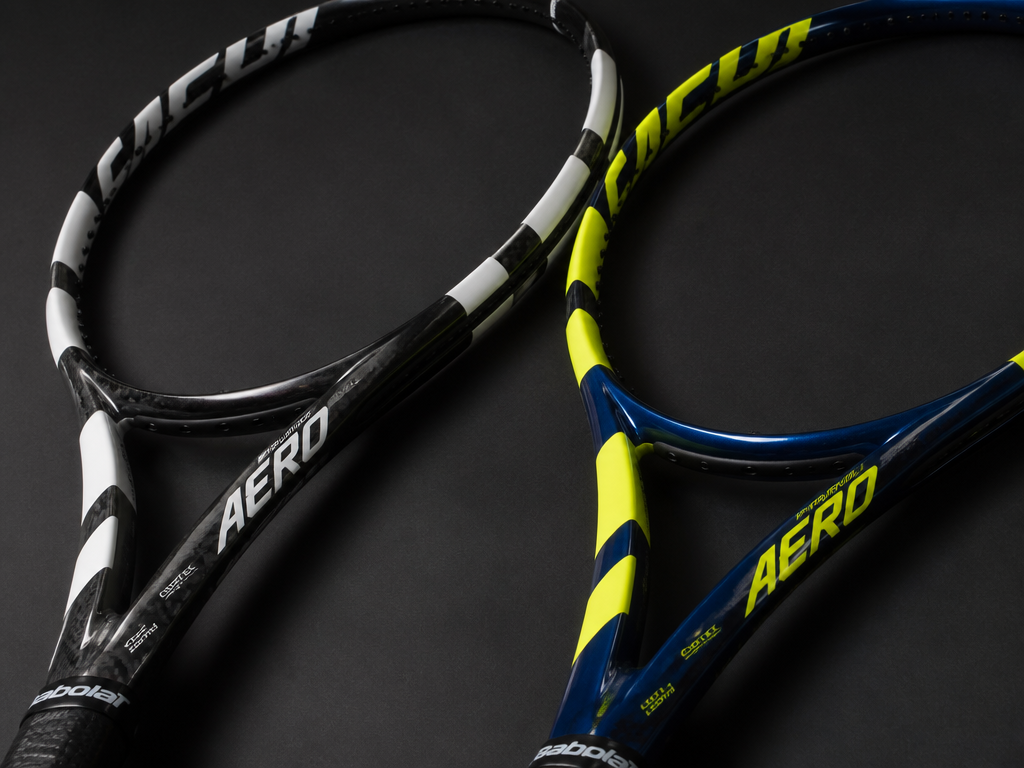
Every year in the back half of August the same box lands on the same shelf: a frame in a colorway that will be on clearance by March, a bag with hardware in tournament livery, a three-ball can in a paint scheme you will see behind a hundred television cutaways. And every year the same question turns up in the forums — the question this tennis gear review exists to answer. Is any of it different from what was already hanging on the wall, or are you paying for paint?
We will give the answer before the argument rather than after it.
The short answer
Across the US Open collections whose published specifications we could line up against the standard catalogue, the racquets are cosmetic reissues of frames already in production, the apparel is licensed styling, and the only two categories where the tournament name attaches to something functional are the balls and the insulated racquet compartment in the larger bags — and that insulation claim is manufacturer-stated, not independently measured.
Everything after this is where the answer turns conditional, because it does, in three specific places: when the special-edition frame is priced below the standard one, when you are a coach buying capacity rather than a player buying a racquet, and when the branded product is the one the tournament actually plays with rather than one it merely licenses.
How we evaluated
This is a synthesis, not a lab report, and the distinction matters for how much weight you give it.
We worked from four kinds of evidence. First, published dimensional specifications — head size, unstrung weight, balance point, beam width, string pattern, stated stiffness — pulled from manufacturers' own product pages and compared line-by-line against the non-branded version of the same model. Second, manufacturer marketing copy, read specifically for what it does not claim; a company that has retooled a mold says so loudly, and silence in that paragraph is informative. Third, independent tester writeups — the retailer playtest panels and long-running gear channels that put multiple hitters on the same frame and publish their disagreements. Fourth, owner reviews at volume, which are noisy individually but useful in aggregate for durability and construction complaints that no playtest week will surface.
We weighted them in roughly that order. A published dimensional spec outranks a manufacturer adjective. A complaint that recurs across dozens of unrelated owner reviews outranks a single enthusiastic tester. Anything we could not attribute to a named source we either hedged explicitly or cut. Where a figure comes from a company describing its own product, we say so rather than laundering it into the neutral voice.
What we did not do: swing anything, weigh anything on a balance, put a frame on a swingweight machine, or log tension loss. There is no on-court component to this piece, and any review of a seasonal collection that claims one within days of the drop is asking you to believe something improbable.
One more caveat, and it is not a small one: collection contents change annually and spec pages get revised quietly. Part of the point below is the method, so you can run it yourself on whatever this year's box contains.
Three tiers of tournament branding
Once you sort the products into tiers, most of the confusion resolves.
Tier one: licensed cosmetics. The product exists year-round. Someone paid for the right to put a tournament name and a color palette on it. Nothing inside changed. This is the overwhelming majority of any event collection, in every sport, and it is not a scandal — it is simply what a licensing deal produces.
Tier two: tournament supply. The product is the one actually used at the event. The ball is the clearest case in tennis, and the on-court uniforms worn by officials and ballpersons are another; Ralph Lauren has held the tournament's outfitting deal since the mid-2000s, dressing the people running the match rather than the people playing it. Here the branding is descriptive, not decorative.
Tier three: design responding to the event's actual conditions. Late-summer New York is hot enough that the tournament maintains a published extreme-heat policy. Gear that genuinely answers that — insulation, ventilation, fabric engineered to a testable standard — belongs in this tier. It is the smallest tier by a wide margin, and it is where the only defensible premium lives.
The racquets: read the version number, not the paint
Here is the checklist we used, and the one we would hand to anyone reviewing tennis gear of this kind:
- Put the two spec sheets side by side. Head size, unstrung weight, unstrung balance, beam width at all three points, string pattern, length, stated stiffness. If every field matches the standard model, you are looking at a repaint.
- Check the version designator. Manufacturers increment these (v8, v9, v10) when the layup or mold changes. A special edition that carries the same version number as the frame it sits next to on the rack is that frame.
- Check the replacement grommet and bumper part number. Molds and grommet sets are matched. Shared part number, shared mold — this is the single hardest tell to fake and the one customization shops rely on.
- Ignore the material nouns. Carbon-fiber trade names, braided layups, and damping compounds are described identically in both listings when nothing has changed. The presence of impressive materials vocabulary is not evidence of new construction.
- Assume the tolerance band, and buy accordingly. Frames come off the line with real spread in static weight and balance, and manufacturers rarely publish a per-model tolerance figure. Customization shops routinely report meaningful variance between two frames of the same model and matched them for a living long before any of these collections existed.

On that last point, one honest wrinkle for the specification-minded: a heavier or thicker paint scheme carries mass, and mass on a frame is never neutral — where it sits changes balance and swingweight more than the gram count suggests. We have not found a published measurement comparing a special-edition finish against the standard finish on the same mold, so we will not put a number on it. Treat it as a reason to weigh and match rather than a reason to buy or avoid.
Below, four familiar frames as their manufacturer lists them. Verify against the current product page before spending — version numbers roll and specs move with them.
| Frame (as listed by Wilson) | Head | Unstrung weight | Pattern | Beam | Event-edition change |
|---|---|---|---|---|---|
| Blade 98 16x19 | 98 in² | 305 g | 16x19 | 21 mm | Finish only |
| Blade 98 18x20 | 98 in² | 305 g | 18x20 | 21 mm | Finish only |
| Clash 100 | 100 in² | 295 g | 16x19 | 24.5 mm | Finish only |
| Clash 100 Pro | 100 in² | 310 g | 16x19 | 24.5 mm | Finish only |
The conditional case, and it is real: a cosmetic edition is a good buy when it is cheaper. These finishes are produced in limited runs and dumped at discount once the tournament is over. If you already play the frame, a clearance repaint of the identical mold is the least risky purchase in the sport — you know exactly what arrives. The bad buy is the same frame at a premium for the finish. That transaction has a name, and it is not performance.
The bags: where the tournament name earns the most
This is the section coaches should read and players usually skip.
Start with the number on the label, because it is the least honest figure in tennis retail. A stated racquet count assumes bare frames — no overgrip build-up, no dampener, no oversized butt cap, nothing else in the compartment. Load real frames with real grips and the practical count drops. Across owner reviews the pattern is consistent enough to plan around: assume you lose roughly a third of the stated capacity once the bag holds gear that has actually been played with, plus whatever a can of balls and a water bottle displace.
| Class | Stated count | Plan for | Insulated compartment | Honest fit |
|---|---|---|---|---|
| Backpack | 2 | 2 frames, laptop, kit | Rare | Commuter, one-court session |
| 6-pack | 6 | 4 frames + balls | Sometimes | Club player, league night |
| 9-pack | 9 | 6 frames + kit | Usually | Tournament player, two-day trip |
| 12-pack | 12 | 8 frames + coaching kit | Usually | Coach, feeding baskets, squad travel |
| Duffel / tote | n/a | 1–2 frames, clothes | No | Gym-first, tennis-second |
The insulated compartment is the only feature in the entire collection with a plausible mechanical justification, so it deserves precision rather than enthusiasm. Wilson markets an insulated lining under the Thermoguard name; the stated purpose is to slow heat transfer into the frame compartment. The underlying physics is uncontroversial as a principle — polymer strings undergo stress relaxation, and relaxation runs faster at elevated temperature, which is why polyester monofilaments shed tension fastest in the hours immediately after stringing and why stringing-trade testing has long treated poly and multifilament tension curves as different animals. Rod Cross and Crawford Lindsey's Technical Tennis is the standard lay reference for that behaviour.
What none of that establishes is the magnitude of the effect in a bag. We could not find a published, controlled measurement of interior temperature or tension retention in a lined versus unlined racquet bag under match-day conditions, from the manufacturer or anyone else. The claim is directional and physically reasonable. It is not quantified. Buy the lining because the larger bags include it anyway, not because you have been shown a number.
The other bag features worth checking are unglamorous and rarely branded: a ventilated shoe pocket that is genuinely separate rather than nominally separate, a harness that distributes across both shoulders when loaded past six frames, and zip pulls and base fabric heavy enough to survive being dragged across concrete twice a day. Owner reviews cluster their complaints on zips and base wear far more than on capacity.
The balls: the one place the name is literal
Wilson has supplied the tournament's ball for decades — since the late 1970s, by the company's own account — and this is the single product in the collection where the branding describes the contents rather than decorating them. The retail can carries extra-duty felt, which is the correct specification for hard courts: a denser, more abrasion-resistant nap that fluffs less catastrophically on gritty acrylic than the regular-duty construction intended for clay and indoor surfaces. Altitude-specific variants exist and are a separate decision entirely.
The honest uncertainty here is narrower than the internet suggests but not zero. Manufacturers generally maintain that tournament-supplied balls and retail cans of the same model share a specification. We have not seen an independent comparison of pressure, mass, rebound, or felt weight between a tin pulled from a tournament court and a can pulled from a shop shelf, and until someone publishes one, anyone telling you they play identically — or that they don't — is telling you a belief.

What we can say without hedging: if you play on hard courts and you buy extra-duty felt, you have bought correctly, and the tournament name on the can is for once an accurate description rather than a licensing fee.
The apparel: styling, with two measurable exceptions
Most event apparel is tier one and should be evaluated the way you would evaluate any other shirt: fit, fabric weight, seam placement, whether the pockets hold a ball without the waistband sagging. The marketing vocabulary here is close to unfalsifiable. "Moisture-wicking" has no consumer-facing number attached to it — no rating, no standardised scale, nothing a buyer can compare across two garments. A claim that cannot be checked should not move your decision.
Two things in this category are checkable, and they are worth knowing.
UPF, when it is tested to a standard. Sun-protection ratings mean something specific when a garment is tested against a published method — AATCC 183 in the US, AS/NZS 4399 in Australia and New Zealand. A number with the standard named is evidence. The words "sun protective" alone are not. For anyone playing four-hour days in late-August sun, this is the one apparel spec that changes an outcome.
Fabric weight in GSM, when published. Grams per square metre is a real, comparable figure, and it tells you more about how a shirt will behave when soaked than any adjective in the product description. Most sportswear brands do not publish it. The ones that do are giving you something you can use.
Everything else — the palette, the borough-themed graphic, the collar treatment — is taste, and taste is a legitimate reason to buy clothing. We only object when taste is sold as performance.
What we would and wouldn't pay a premium for
Worth a premium: the insulated 9- or 12-pack, if you are carrying frames through heat and you would have bought a bag of that class anyway. Extra-duty felt in the correct can for your surface. A garment with a UPF rating and a named test standard behind it.
Not worth a premium: any frame whose spec sheet is identical to the standard model. Any apparel item whose only distinguishing feature is the graphic. Any accessory where the branded version costs more than the unbranded version of the identical part.
Worth buying anyway: the clearance repaint of a frame you already play, after the tournament ends, at a discount, matched for weight and balance on arrival.
Who this is for, and who it isn't
This is for the coach carrying eight frames, a ball basket, cones, and a first-aid kit through a parking lot in ninety-degree heat. You are the reader for whom the insulated 12-pack is a real purchase rather than a branded one, and you should be shopping the harness and the base fabric before you look at the colorway.
This is for the equipment-literate player who already knows their mold and their pattern and wants to know whether a version number changed. It didn't. Buy the discount.
This is not for the player hoping a seasonal edition plays differently. It doesn't, and no reviewer who has read the spec sheets will tell you otherwise.
This is not for the buyer who is genuinely just buying the look — and that buyer should feel no need to justify it in performance language. Wanting the shirt is a complete reason to buy the shirt. It is just not a spec.
The line worth screenshotting
In the US Open collections, the balls are the only product where the tournament name describes what's inside the packaging, and the insulated large-format bag is the only one where paying more buys you something other than a color.
Evidence grade
For the central claim — that the racquets in these collections are cosmetic reissues of frames already in production — we rate the evidence Strong. It rests on published dimensional specifications that match field-for-field, shared replacement-part numbers, and marketing copy that conspicuously declines to claim a new mold or layup.
For the secondary claim — that the insulated bag compartment meaningfully preserves string tension — we rate the evidence Weak. The mechanism is sound and the direction is right; the magnitude is unmeasured in any source we could find, and the only party asserting a benefit is the party selling it.
The question we can't close
So here is what we still don't know, and it is a question someone with a thermocouple, a tension meter, and a free weekend could answer better than any amount of reading.
How much tension does a strung frame actually lose sitting in a bag on a hot court, and how much of that does insulation prevent? Polymer stress relaxation accelerates with temperature — that is settled. What is not settled is whether the interior of a lined bag on a New York hard court in September runs five degrees cooler than an unlined one or twenty, whether that gap persists over six hours or closes in forty minutes, and whether the resulting difference in tension is large enough for a human being to feel. Nor do we know whether polyester and nylon respond differently enough to storage heat that the right advice varies by string bed — a poly job might lose more absolute tension while a multifilament loses more of what a player would call feel.
Until someone publishes that, the insulated compartment is a reasonable inference wearing the clothes of a product feature. We would rather say that than pretend the number exists.