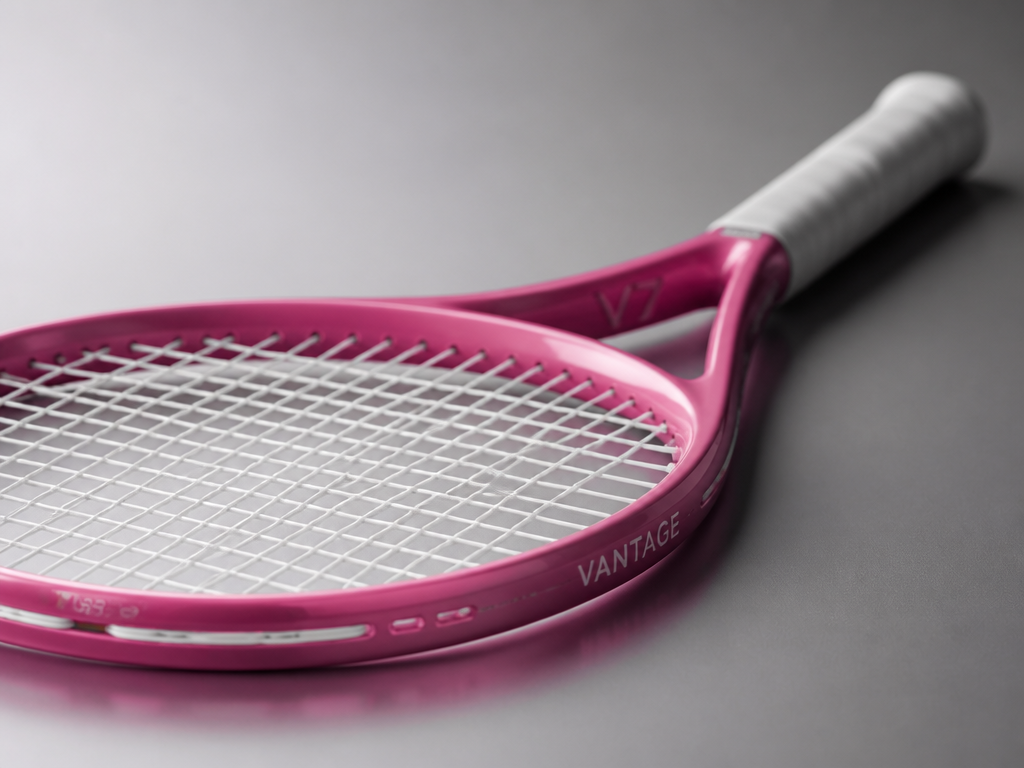
If you want a racquet in pink, you are not choosing between style and substance — you are choosing a finish that sits on top of whatever frame the manufacturer poured it onto. Some of those frames are genuinely good. A few are starter SKUs that lean on the paint. The short verdict: pink tennis racquets are as playable as their non-pink twins when they share a layup and spec — the color tells you almost nothing about quality, and the "pink means beginner" reflex is a marketing artifact, not a material fact. The work is reading the spec sheet, not the swatch.
We wrote this for two readers in particular: a parent buying a daughter's first or second racquet, and an adult beginner who wants gear that looks like hers without quietly downgrading her tennis. Both deserve a straight answer about where the skepticism around pink frames comes from — and whether it holds up.
How we evaluated
We did not hit with these racquets. This is a synthesis. We compared the published specifications each manufacturer lists — head size, length, strung weight, balance, grip size — against the spec sheets for the brands' non-pink performance frames in the same family. We read independent tester writeups from outlets such as Tennis Warehouse's playtest team and owner feedback aggregated across retailer reviews. Where a number is the manufacturer's own and hasn't been independently confirmed, we say so. Where reviewers disagree, we say that too.
The point of the exercise is narrow: to separate what's true about a frame from what's true about its color.
A short history of "pink means beginner"
The belief has a source, and the source is thinner than the belief.
Through the 1990s and 2000s, the flagship performance lines — the frames the pros actually endorsed — shipped almost entirely in black, navy, and the occasional aggressive red or yellow. Pink, when it appeared, lived in two places: licensed and entry-level junior SKUs (often co-branded with a cartoon or a starter bundle), and pre-strung recreational frames sold in big-box sporting goods aisles. So a whole generation of buyers learned, by inventory alone, that pink racquets were the cheap ones. Not because the polymer was different — because that was the only shelf pink was stocked on.
That association calcified into received wisdom: a coach glances at a pink frame and assumes a beginner is holding it, a parent assumes the pink one in the rack is the "kid version." The assumption was once a decent statistical bet, given what was actually for sale. It is a much worse bet now.
Two things changed. First, brands started releasing genuine performance frames in pink or pink-accented colorways — Babolat's Pure Aero and Pure Drive families have shipped limited or seasonal colorways with pink, on the same molds as the standard release. Second, the junior market matured: a junior frame's playability is governed by its length and weight, both chosen for the child's size, and the paint is irrelevant to either. The color migrated across the whole price ladder, but the old reflex stayed put.
The honest version is this: a pink finish has never told you what's under it. For a stretch of retail history it correlated with "cheap" because of how shelves were stocked, not because of how frames were built. Correlation, expired.
What the specs actually say
A finish is paint and clearcoat. It does not change the graphite layup, the beam stiffness, or the string pattern — the things that determine how a frame plays. When a brand offers a performance frame in a pink colorway, the manufacturer's published spec for that colorway typically matches the standard release exactly. Independent testers reviewing those frames review the mold, not the coat; we found no credible tester report attributing a performance difference to a color variant on an otherwise identical frame.
Where caution is warranted is the opposite case: a pre-strung recreational frame that only comes in bright colors. There the pink isn't the problem — the frame is a basic aluminum or low-end composite build, and it would play the same in gray. Judge it by its spec (head size, weight, whether it's aluminum or graphite-composite), not its color, and you'll price it correctly.
A comparison: pink and colorway frames by spec
The grid below pulls manufacturer-published specifications. Strung weights are manufacturer-stated unless a tester independently confirmed; treat them as nominal. Availability of any given color is seasonal and varies by region.
| Frame (color/colorway) | Type | Length | Head size | Weight (mfr-stated) |
|---|---|---|---|---|
| Babolat B'Fly junior (pink) | Junior | 23–26 in (by SKU) | ~100 in² | ~7.4–8.5 oz strung |
| Wilson Burn Pink junior | Junior | 23–25 in (by SKU) | ~100 in² | light, junior-tuned |
| Head junior (pink colorway) | Junior | 21–25 in (by SKU) | ~95–105 in² | junior-tuned |
| Babolat Pure Drive (pink colorway, when offered) | Adult performance | 27 in | 100 in² | ~11.2 oz strung |
| Babolat Pure Aero (pink-accent colorway, when offered) | Adult performance | 27 in | 100 in² | ~11.3 oz strung |
The pattern is the point: the junior frames are differentiated by length, the adult frames by mold and weight — and within either group, the pink option shares its spec with the standard release. The color is the last thing on the sheet that matters.
Sizing, which is the decision that actually matters
For a child, the variable that governs playability is length, and length is chosen by height, not age. Standard manufacturer and USTA junior guidance maps roughly as follows, and it's worth measuring rather than guessing:
- Up to ~40 in tall: 21-inch frame
- ~41–44 in: 23-inch
- ~45–49 in: 25-inch
- ~50–55 in: 26-inch
- Taller / pre-teen and up: consider a 27-inch adult frame
For grip, juniors and many adult women land in the smaller sizes (commonly 4 to 4 3⁄8 in for adults; junior grips are smaller still and often non-resizable). A grip that's slightly too small can be built up; one that's too large can't be shrunk, so erring small is the safer mistake. This is standard fitting guidance, not a measurement we took.
Who this is for — and who it isn't
This is for the parent who wants a frame their daughter will actually want to carry, and the adult beginner choosing gear that reflects her — both of whom should buy on length, weight, and grip, then pick the color they like from whatever's in stock. If the pink one and the gray one share a spec sheet, buy the one you'd rather look at.
This isn't for the buyer assuming color signals tier. It doesn't. A pink performance frame is a performance frame; a pink recreational frame is a recreational frame. Read the build line — aluminum vs. graphite-composite, strung weight, head size — and let that, not the swatch, set your expectations and your budget.
Evidence grade
For the central claim — that a pink finish does not affect playability on an otherwise identical frame — the evidence is Strong: it follows from how frames are manufactured (paint is not structure) and is consistent with independent tester reports, which evaluate the mold and never attribute performance to a colorway. For the historical claim about why the "pink equals beginner" belief took hold, the evidence is Moderate and partly inferential — drawn from observable retail stocking patterns rather than a documented industry survey.
Reviewer note — I: When I help a friend shop, I cover the color swatch with my thumb and read the spec line out loud first. If the racquet survives that — right length, sane weight, grip that fits — then the color is just the part that makes her want to bring it to the court. The order is the whole argument.