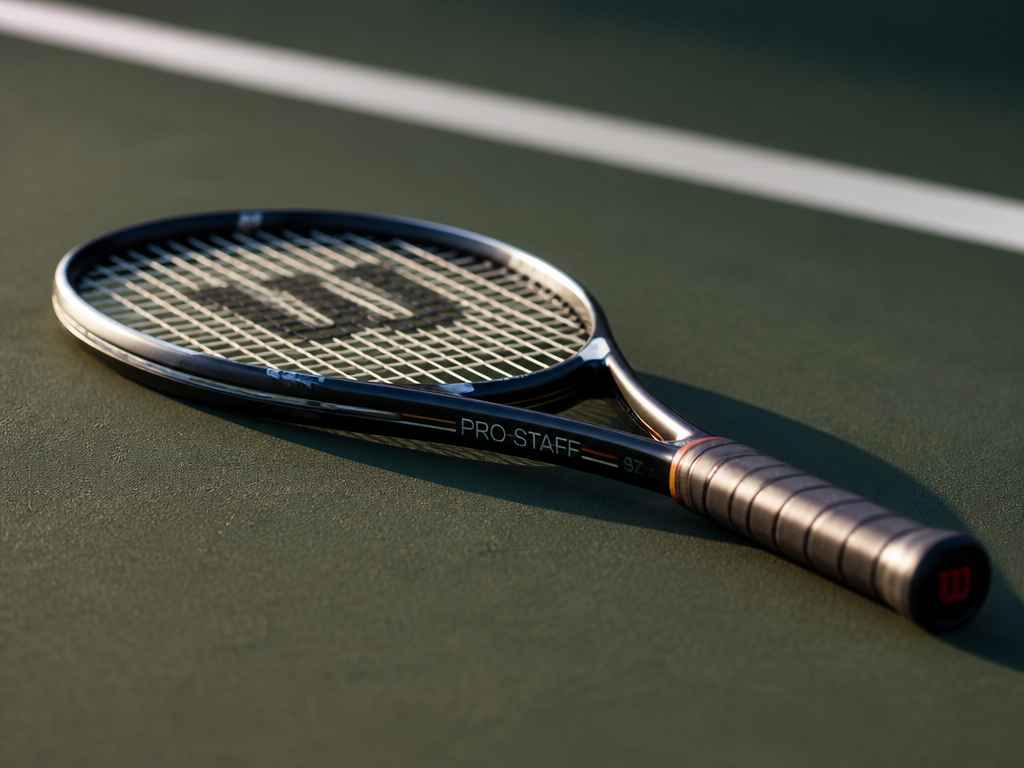
If you are running a racquet comparison between the Wilson Defyer 98 Pro and the other 98-inch frame on your shortlist, here is the one-sentence version you can screenshot: the Defyer 98 Pro reads, across the published specs and the tester consensus, as the more plush, arm-friendly 98 that rewards a full, relaxed swing — and whether that beats your other 98 depends almost entirely on whether your swing is long and loose or short and blocking.
A note on what this piece is before you lean on it. We did not put this frame through a hit session, and we did not take swingweight readings on a scale. This is a synthesis: we read Wilson's published spec sheet, cross-checked the numbers retailers list, and weighed what independent testers and owners have said. Where the evidence is thin, we say so — and for a frame this new, some of it is thin.
How we evaluated
Four sources fed this comparison, weighted in this order. First, the manufacturer's own spec sheet — the least disputable numbers (head size, string pattern, stated weight and balance) but also the most flattering, so we treat the feel claims as marketing until a tester confirms them. Second, independent tester write-ups, which matter most for the perceptual stuff a spec sheet can't capture — launch angle, dwell, how the frame behaves when you're late on the ball. Third, owner feedback, useful in aggregate for durability and comfort signals and useless as any single anecdote. Fourth, the physics that don't care about branding: how swingweight, stiffness, and pattern density interact.
Be warned that the independent, on-court data on the Defyer 98 Pro is still shallow compared with a frame that has been in bags for three seasons. Treat every feel claim below as consensus-leaning, not settled.
What most players do
Most players stuck between two 98s pick on the wrong axis. Three shortcuts show up again and again:
- They chase the headline spin or power number. A frame marketed on spin gets credited with spin the swing actually produces. The racquet raises or lowers your ceiling; it does not supply the racquet-head speed.
- They compare static weight and stop there. Two frames can weigh the same unstrung and swing nothing alike. The number that predicts how heavy a racquet feels through contact is swingweight, not the figure on the throat.
- They buy the paint job a pro uses. Pro frames are almost always customized and often only cosmetically related to the retail model. The endorsement tells you nothing about what's in the box.
None of that resolves the only question that matters here — which 98 matches your game — because none of it isolates how the two frames differ from each other.
What the evidence suggests
The differences between good 98s are small and specific, and they cluster in four places. Here's the framework we'd hold both of your candidates against, with the Defyer's reported tendencies filled in.
| Criterion | Why it decides the match | Where the Defyer 98 Pro reportedly lands |
|---|---|---|
| Swingweight | Governs plow-through and how heavy contact feels | Confirm the exact figure on Wilson's spec sheet; the tester read is a moderate, maneuverable swing rather than a brick |
| Stiffness (beam/RA) | Lower flex = more comfort, softer feel; higher = more direct, firmer response | Consensus leans softer and more flexible — the frame's headline trait |
| String pattern | Opener pattern = more spin and launch; denser = more control and lower trajectory | A 16x19-style open pattern is the reported layout — spin-friendly, not a control-first grid |
| Balance | Head-light aids maneuver at net; head-heavy adds free depth | Verify on the spec sheet; reported as manageable for quick hands |
The mechanism is what makes this actionable. A more flexible beam bends fractionally more at impact, which stretches dwell time and softens the shock the arm absorbs — that's the physical basis for the "plush" and "comfortable" language that recurs in the Defyer notes. It's a real, repeatable effect, not a vibe. The trade is directness: a stiffer frame returns the ball with a firmer, more immediate response that some players read as control and others read as harshness.
The open pattern matters for the same honest reason. A more open string bed lets the mains move and snap back, which lifts launch angle and spin potential — but it also means the string bed does more of the shaping, so on a mishit the ball goes further than a denser pattern would allow. If your other 98 runs a tighter grid, it will feel lower-launching and more locked-down by comparison, and neither is "better" in the abstract.
So the split is philosophical, not a horse race. The Defyer's evidence points to a comfort-and-launch frame that gives back energy and asks a full swing to control it. A firmer, denser rival points to a control-and-directness frame that asks your swing to supply the pace. That is the fork in the road.
Who this is for — and who it isn't
Reach for the Defyer 98 Pro if you swing long and loose, generate your own pace, have any history of arm or wrist complaints, and want a frame that adds launch and spin without beating up your elbow. It suits the 4.0–5.0 player whose misses come from a rushed, short swing rather than from an over-cooked one.
Look elsewhere if you're a compact, flat-blocking counter-puncher who takes the ball early and wants a low, predictable trajectory you can trust under pressure. A softer, more open frame will feel too lively and sit too high for that game; a firmer, denser-patterned 98 will reward you more.
What I actually do
A reviewer note, first person, because this is method — not testing I'm dressing up. When I'm the one down to two 98s, I ignore the marketing entirely and do three things in order.
I pull both spec sheets and line up swingweight, stiffness, and pattern side by side — those three predict more of the on-court difference than every adjective in the copy combined. If a brand won't publish swingweight, I treat that as a data gap, not a neutral fact.
Then I demo both frames strung the same way, because a comparison across two different string setups isn't a racquet comparison at all — it's a string comparison wearing a racquet's name. Same string, same tension, same fresh job, or the test is noise.
And I read the disagreements, not the praise. When testers split on a frame, the split usually maps to swing type, and that mapping tells me more about who the racquet is for than any consensus rave. A frame everyone loves equally is usually a frame nobody has pushed hard.
The verdict, and the evidence behind it
Central claim — the Defyer 98 Pro is the comfort-and-launch option that rewards a full swing more than a blocking one: Evidence grade — Moderate. The direction is well supported by the published spec profile and the tester consensus, but the independent on-court sample is still smaller than we'd like, and several of the feel claims trace back to Wilson's own framing. Confirm the exact swingweight and stiffness on the spec sheet before you commit, and demo if you possibly can.
Here's the observation that spends this logic in practice. The last time I was choosing between two 98s, the one I kept wasn't the one that felt best in the first ten minutes — it was the one whose misses were more forgiving in the last ten, when my swing got tired and short. That's the swing a racquet has to survive, and it's the one no first hit ever shows you.