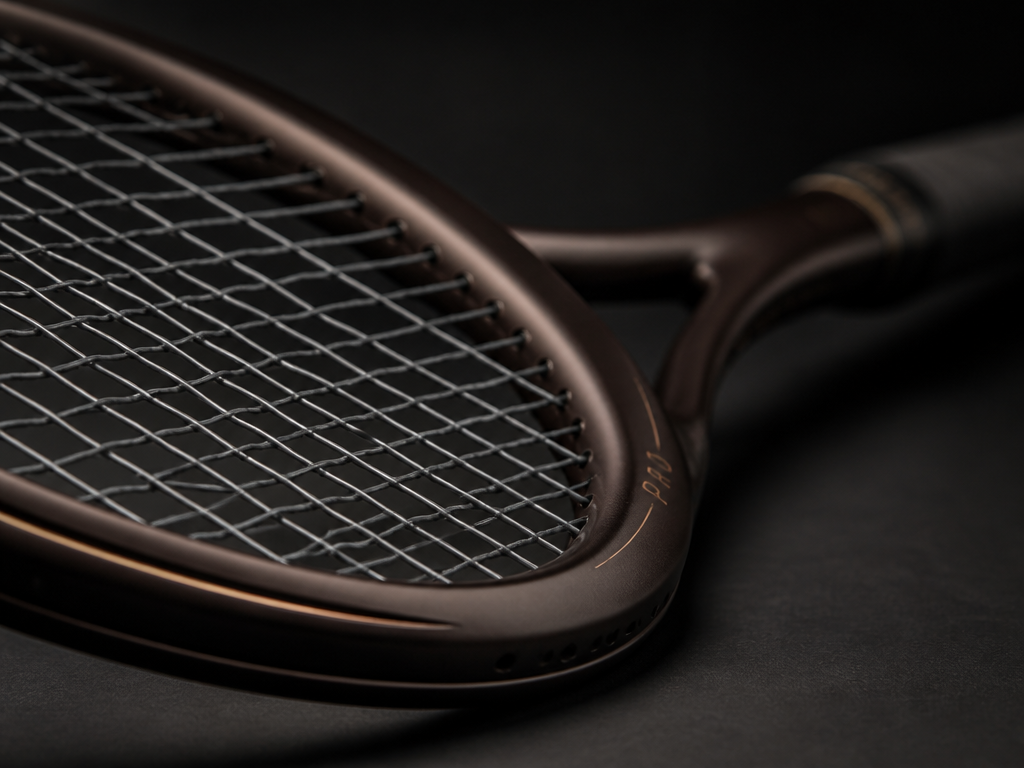
Here is the question we keep getting in one form or another: is a colorway ever a reason to buy a racquet? The Yonex EZONE Espresso Brown Edition is just the current occasion for asking it — a deep coffee-toned finish on a line that has spent most of a decade in blue — and the honest answer is that it is a reason to choose, not a reason to buy. If you were already replacing an EZONE, this is a perfectly good moment to do it. If you weren't, a finish is not a performance upgrade, and to Yonex's credit, nobody there has claimed it is.
That's the verdict. The rest of this is the part where we show our work, including the places where the answer turns into "it depends."
The question underneath the question
Nobody who has played for more than a season genuinely believes brown paint adds spin. What they actually want to know is subtler and more reasonable: am I missing something? Manufacturers ship cosmetic editions on a cadence, retailers stock them as if they were news, and the gear press covers them as launches. That creates a low hum of suspicion that a special edition might quietly be a special frame — a tweaked layup, a different balance point, a limited run that will be gone in six weeks and command a premium later.
Sometimes, in racquet history, that has been true. Usually it hasn't. So the useful thing a review can do here is not gush about how good espresso brown looks under lights — it does look good, and we'll say so once — but tell you which parts of this decision carry real consequences and which are noise.
How we evaluated this
We read, we didn't hit. That distinction matters, so here's exactly what went into this piece.
Manufacturer sources. Yonex's published specifications for the EZONE family — head size, unstrung weight, string pattern, stated construction — taken from Yonex's own site and mirrored in major retailer listings. Manufacturer figures are reliable for nominal specs and unreliable as a guide to what any individual frame weighs coming out of the box.
Independent tester coverage. The EZONE molds have been playtested extensively by the established gear outlets and reviewers over successive generations. We weighted that coverage for what it's good at — describing how the underlying frame behaves — and discounted it entirely for anything about this specific finish, because a repaint doesn't get its own playtest and shouldn't.
Owner feedback. Forum and retailer reviews are noisy and self-selecting, but they are the only broad source on things like finish durability and grip-size availability, so we used them for exactly those questions and flagged them as soft evidence.
What we cannot tell you. We have not swung this racquet, weighed one, or put one on a swingweight machine. Nobody should tell you a paint scheme plays differently, and we're not going to.
What's actually different — and what isn't
The working assumption for editions in this category is that they are graphics on an existing mold: same layup, same specs, new finish. That is what Yonex's presentation of such editions has consistently implied, and it is what the retail listings generally state. Before you buy, read the listing for the exact frame — if it doesn't explicitly say the specifications are unchanged from the standard model, treat that silence as a question, not an answer.
Here's the wrinkle worth more of your attention than the color: frames of the same model vary. Retailers publish weight and balance tolerances precisely because production units land in a band, not on a point. Two EZONE 98s off the same line can differ by a few grams and a handful of swingweight points, which is a larger real-world difference than anything a cosmetic edition introduces. Could a different paint process add a gram? In principle. Has anyone published a measurement showing it does? Not that we found. If matched frames matter to you, the answer is a shop that will weigh and match them — not a colorway.
Which EZONE are you actually choosing?
The finish is the easy decision. The mold is the one that changes your tennis. These are Yonex's published nominal figures for the recent EZONE range; confirm them against the listing for the specific edition and generation you're buying, since the line is revised on a roughly two-year cycle.
| Model | Head size | Unstrung weight (listed) | Pattern | Best suited to |
|---|---|---|---|---|
| EZONE 98 | 98 sq in | 305 g | 16x19 | Full-swinging players who want control with some free power |
| EZONE 98 Tour | 98 sq in | 315 g | 16x19 | Stronger players wanting more plow-through and stability |
| EZONE 100 | 100 sq in | 300 g | 16x19 | The line's centre of gravity: club players who want forgiveness without going light |
| EZONE 100L | 100 sq in | 285 g | 16x19 | Faster swings for players with shorter, more compact strokes |
| EZONE 105 | 105 sq in | 275 g | 16x19 | Maximum forgiveness and easy depth; the most arm-friendly of the group |

The consensus across tester coverage of the line has been consistent for years: the EZONE trades a little precision for a comfortable, powerful, forgiving response, and the 100 is the model most club players are happiest with. If you are moving between rows on that table because a colorway is only available in one of them, you are letting the paint make a real decision. Don't.
The pro-endorsement question
The EZONE has genuine tour presence — players including Naomi Osaka, Frances Tiafoe and Ben Shelton have been associated with the line — and that visibility is part of why the badge carries weight at club level. It should carry less weight in your decision than it does.
Professional frames are routinely painted to resemble the current retail model while differing underneath in mold, weight, balance and stiffness. This is an open, decades-old practice across every major brand, not a scandal. Endorsement tells you a company invests in the line; it does not tell you the frame in the shop is the frame on court. And it certainly tells you nothing about a cosmetic edition, which no touring professional has any reason to play.
Where the answer is honestly "it depends"
Availability. Special finishes often ship in a narrower set of molds and grip sizes than the standard run. If you need a G3 in the 98 Tour, the edition may simply not exist for you, and that ends the conversation.
Price timing. This is the one place where a new cosmetic actually moves money. A new finish arriving usually means the outgoing one gets discounted. If you like the frame and don't care about the paint, the old colorway is the buy.
Resale. Limited runs occasionally hold value slightly better on the used market. "Occasionally" and "slightly" are doing real work in that sentence; we would not pay a premium on that theory.
Finish wear. Owners of dark and matte frames across brands frequently report that scuffs from court scrapes show more plainly than on lighter finishes. This is soft, self-reported evidence rather than anything measured, but it is consistent enough to mention. A brown frame will look older, sooner, than a white one, for the same amount of tennis.
Matching later. If you play with two frames and want a third down the line, a limited edition is harder to add to. Buyers who match frames should think in pairs at purchase time.
Who this is for, and who it isn't
Buy it if: you already play an EZONE and are due for replacement; you're moving into the line from a similar power-and-forgiveness frame and the mold you want is available; or you want a racquet you enjoy looking at and you have made peace with the fact that you're paying for that. That last one is a legitimate reason. Gear you like picking up is gear you carry to the court.
Skip it if: you're on the fence about the EZONE's character in the first place — buy the discounted outgoing cosmetic and save the difference for a restring or two; you need a specific grip size or mold that the edition doesn't cover; you match frames tightly; or you're hoping a new edition signals a quiet performance revision. It doesn't, and if it ever did, Yonex would say so on the box.
If you were already buying an EZONE this season, buy this one. If you weren't, the paint is not the reason to start.
Evidence grade
Central claim: the Espresso Brown Edition is a cosmetic variant of an existing EZONE mold with unchanged specifications. Evidence grade: Moderate. It is consistent with manufacturer framing, retailer listings and how this class of edition has worked historically — but we have seen no independent measurement of an Espresso Brown frame against a standard one, and no tester has playtested this finish specifically. The claims about the molds — weights, head sizes, playing character — rest on much firmer ground: published specs plus years of independent tester consensus. Grade those Strong.
A note from one of us: I stopped replacing frames on the cosmetic cycle about four years ago. My current pair is two generations behind, and I bought the second one used, in a colorway I actively dislike, because it was the same mold at roughly half price and a stringer matched it to the first within a few grams. It looks mismatched in the bag. That's what the logic in this article looks like when you actually live with it, and it's why I can tell you the espresso brown is lovely without telling you to buy it.