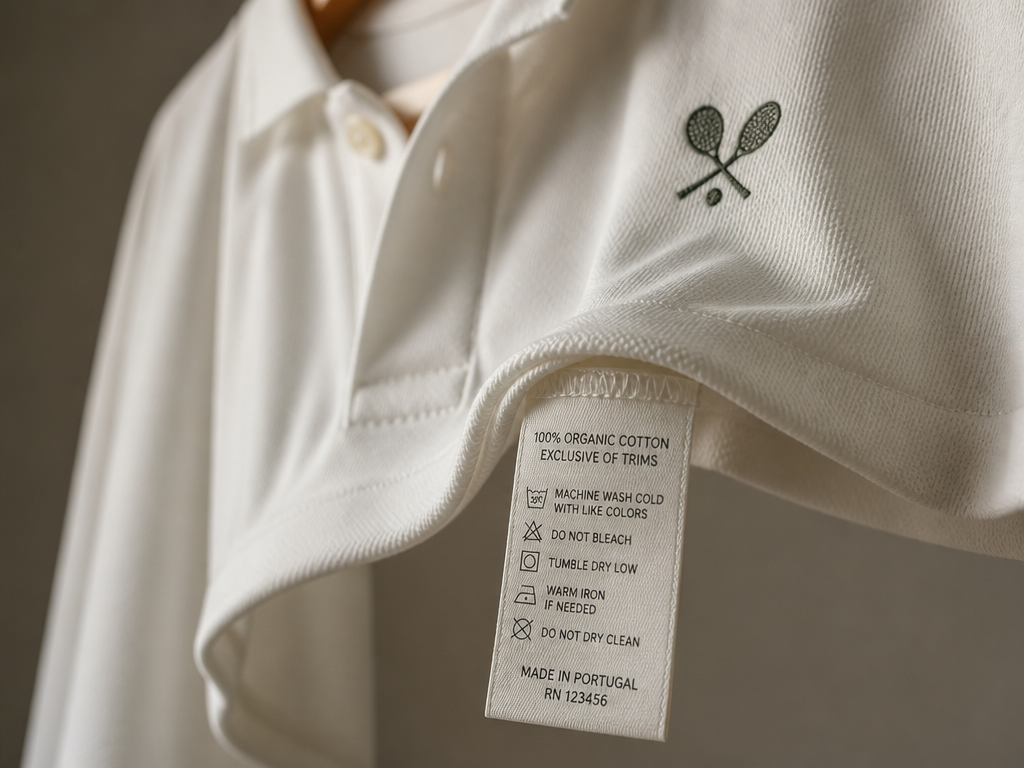
There is a kind of shopper who watches the changeover as closely as the rally, and not for the tactics. It is to see what the player has on: whether the logo is the size of a coin or a coaster, whether the shorts break above the knee, and whether that piece will still exist in the brand's tennis apparel line by autumn. If that is you, you have probably also noticed a shift in how these clothes are sold. "Worn by" has quietly become "designed with."
That is a much bigger claim, and it is worth asking what backs it up.
How we evaluated
We did not put any of this on and hit with it. What we did was compare what the brands say against what can actually be checked: product pages on the makers' own domains, published fabric information, the way pieces appear and disappear from a line season to season, and the pattern in independent tester write-ups and owner reviews on retail listings.
We weighted those sources unevenly, on purpose. A brand's statement that a player "contributed to the design" is a marketing claim and is treated as one. A stated fiber blend, a listed inseam, or a garment that is still in the catalogue three seasons later is a fact. Owner reviews are noisy and skew toward the very pleased and the very annoyed, but they are the only evidence anyone publishes about how a shirt behaves in its second year — which is the part no sponsored athlete ever experiences, because they are handed fresh kit every match.
Where sources disagree, we say so. Where a number comes from the company selling the thing, we say that too.
Three models, and what each one actually gives you
Sort the endorsements and they fall into three structures, not one.
The ambassador deal. The player wears what the brand's design team makes. This is the Nike, adidas, and Yonex model, and it is a contract about visibility, not product development. The clarifying example is Roger Federer's 2018 move to Uniqlo: the deal covered apparel and not footwear, so he played that Wimbledon in Uniqlo kit and Nike shoes. Press reports at the time put the contract around $300 million over ten years; neither party publicly confirmed the figure, so treat it as reported rather than known. What is not in dispute is the shape of the arrangement — a logo placement, negotiated.
The consulted collection. The player is credited with design input. BOSS has built its tennis line this way, with Matteo Berrettini presented as a co-designer and Taylor Fritz, who wore the brand in the 2024 US Open final, as its most visible on-court presence. Lacoste has run comparable collections with Novak Djokovic since 2017. The question this model raises is simple and rarely answered: which specific feature came from the player? Brands almost never say. A collection described as "developed with" a top-ten pro and a collection described as "inspired by" one look identical on the hanger.
The equity or founder brand. The player owns part of the outcome. This is the oldest model in the sport — Lacoste was founded in 1933 by René Lacoste, a seven-time major champion who wanted a shirt that worked, and Fred Perry built his label in the 1950s on the same premise. The modern version is Federer's stake in On, which the company announced in 2019 and which was disclosed again around its 2021 public listing. On has since signed Iga Świątek and Ben Shelton and moved properly into tennis footwear.
| Model | What the player supplies | What you can verify | Typical logo load |
|---|---|---|---|
| Ambassador | Visibility | The contract exists; nothing about the garment | Highest — the logo is the deliverable |
| Consulted collection | Stated design input | Rarely anything specific | Moderate, often restrained |
| Equity / founder | Capital and reputation | Ownership disclosures; line longevity | Usually a heritage mark, not a wordmark |
The criteria that separate them
Traceability of input. Only the founder model gives you something checkable, and even then it is indirect. Ownership disclosure is a matter of record; "contributed to the design" is not. Our working test: if a brand names a feature and a measurement — a stated inseam in inches, a specific collar construction, a pocket that closes — the input claim is worth something, because a measurement is falsifiable at retail. If the claim stops at adjectives, ignore it.

Cut fidelity. Tour kit is frequently made to a player's measurements and does not map cleanly onto the retail size run. This is the most consistent complaint in owner reviews across all three models: the shirt on court and the shirt in the box are relatives, not twins. Endorsement structure does not appear to predict this either way.
Logo load. Here the models genuinely diverge, and it runs opposite to intuition. Pure ambassador deals carry the heaviest branding, because the branding is the product being sold. Founder brands tend toward a small heritage mark — the crocodile, the wreath — that reads as a maker's signature rather than a billboard. If you have been buying quieter clothes for years, you have probably already been selecting for this without naming it.
Carryover. Does the piece survive into next season under the same name? Fashion-house tennis lines refresh aggressively; a shirt you liked in spring may be unfindable by the following spring. This is the practical difference between a garment and a drop, and it matters more than any of the design-credit language, because it determines whether you can buy the second one.
Fabric disclosure. Racquet buyers get strung weight, balance, and swingweight as a matter of course. Apparel buyers get fiber percentages and a trademarked fabric name. Almost nobody publishes fabric weight in grams per square metre, which is the single number that would tell you whether a polo is a summer shirt or a shoulder-season one.
A test case: the sustainability line
Most of these collections now carry an environmental claim, often around recycled polyester or an additive said to speed biodegradation. The recycled-content claims are auditable in principle. The biodegradation claims usually rest on accelerated landfill-simulation methods such as ASTM D5511, and the standing critique — made by textile scientists and by regulators reviewing green marketing — is that the test conditions do not resemble a real landfill. We are not calling any specific claim false. We are noting that it is exactly the kind of statement a consulted pro is in no position to have verified, and that it arrives wrapped in their credibility anyway.
The verdict
Across the pieces we looked at, endorsement structure turns out to be a weak predictor of whether a garment is good. The consulted collections were not reliably better cut than the ambassador ones, and founder heritage guarantees nothing about a shirt made ninety years after the founder retired.
The two signals that did track with satisfied owners were mundane: a product page that publishes real fabric specifics, and a piece that has stayed in the line across seasons. The founder and equity brands come out modestly ahead, not because a champion touched the pattern, but because owning the business creates a structural reason to keep a good piece in the catalogue instead of replacing it every quarter.
Put plainly: buy the garment, not the signature. Where the signature helps is as a tiebreaker between two shirts you already like.
Who this is for, and who it isn't
This is for the player who wants restrained kit from a maker with a reason to care, and who is prepared to judge a product page rather than a campaign. It is not for anyone buying the shirt because a specific player wore it in a specific match — that is a perfectly good reason to buy clothes, and none of the above will improve on it. It is also not for the two-shirts-and-done pragmatist, for whom a plain performance polo at a third of the price is straightforwardly the better purchase.
Evidence grade for the central claim — that endorsement structure poorly predicts garment quality: Moderate. The reasoning rests on the disclosure gap and on owner-review patterns, both real but both indirect. The carryover heuristic is weaker still — call it Weak — because nobody publishes catalogue-longevity data and we are inferring it from listings.
Try this week
Take the one court shirt you actually reach for first. Find its page on the maker's own site and check two things: is it still listed under the same name and colourway as when you bought it, and does the page state anything about the fabric beyond percentages? If both answers are yes, buy the second one now, before the line refreshes. That is a more reliable upgrade than any new collection with a champion's name on the tag.