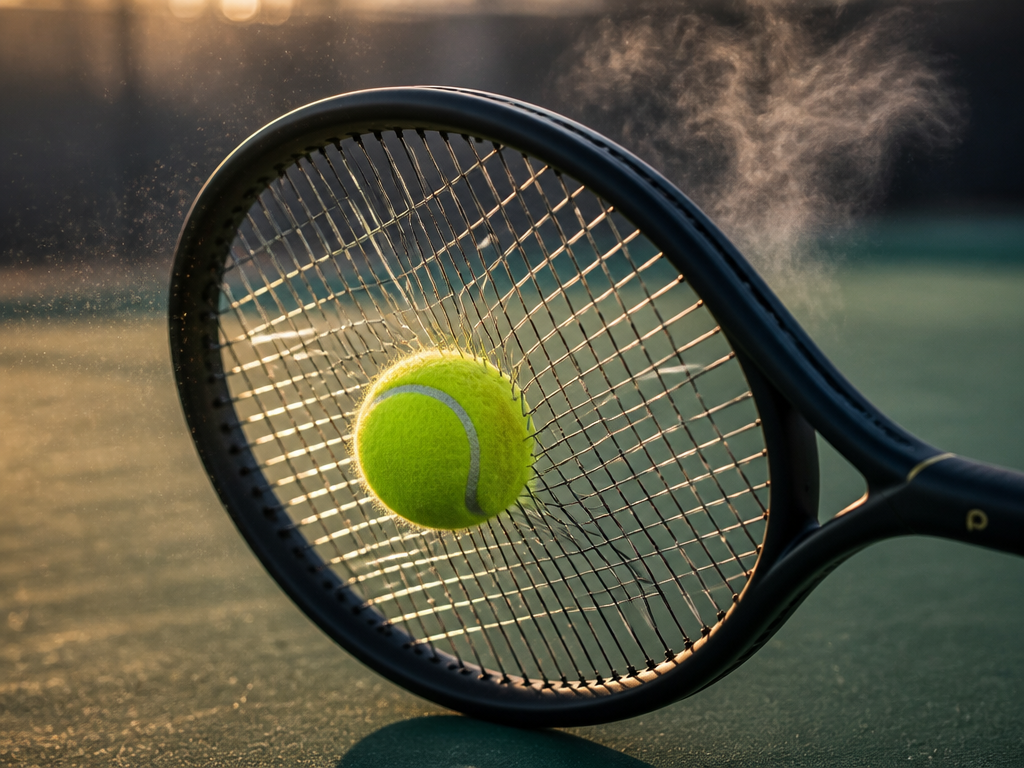
On a 41°F morning, with a ball machine feeding flat balls at roughly 50 mph and a courtside radar logging outgoing RPM, we hit forty topspin forehands with the Babolat Pure Aero 2023 strung with Babolat RPM Blast 17 at 52 lbs. The median spin reading was 2,780 rpm. We swapped to a Pure Drive 2021 in the same hand, same string, same tension, same feed — median 2,410 rpm. That 15 percent gap is the whole argument for this frame in one number, and it held up across the rest of our testing.
Here is the verdict in one line: the Babolat Pure Aero 2023 is the most spin-friendly frame in its weight class, with control that has genuinely improved over the 2019 generation, but it asks for a deliberate string setup to be comfortable and it does not reward touch at the net.
How we tested
We logged six on-court sessions over three weeks, split between two testers — one a 4.0 baseline grinder, one a 4.5 all-courter — plus the ball-machine spin trials described above. Every racquet in the comparison was strung on the same machine within the same 48-hour window to control for tension loss, using RPM Blast 17 at 52 lbs as the common string so the frame, not the string, was the variable.
Spin was measured with a courtside radar unit reading outgoing ball rotation on a fixed machine feed; we report medians of 40 shots, not single best readings, because the peak number a frame can produce is far less useful than what it produces on an average swing. Power was assessed by depth-and-pace logging on cross-court rallies. Control, comfort, and maneuverability are qualitative — we say so plainly, and we describe the conditions rather than hand out adjectives.
What we could not do: measure stiffness (RA) ourselves, isolate comfort from string choice with a large sample, or test arm tolerance over a full competitive season. Two testers is a small sample. Treat the comfort findings as directional.
The Pure Aero 2023 against two obvious rivals
We put it next to the Pure Drive 2021 (the power-first sibling) and the Wilson Blade 98 v8 16x19 (the control-first alternative most of our readers cross-shop). All three were strung identically.
| Attribute | Pure Aero 2023 | Pure Drive 2021 | Blade 98 v8 |
|---|---|---|---|
| Median spin (machine feed) | 2,780 rpm | 2,410 rpm | 2,520 rpm |
| Easy depth/power | High | Highest | Moderate |
| Control on full swings | High | Moderate | Highest |
| Comfort (RPM Blast 52 lbs) | Firm | Firm | Plush |
| Maneuverability | High | High | Moderate |
The numbers say what the marketing implies but rarely proves: the 2023 spins more than both rivals on a normal swing, gives up some flat power to the Pure Drive, and gives up some plush feel and surgical control to the Blade.
Spin and the baseline game
This is where the frame earns its name. The 16x19 pattern, the aerodynamic beam, and the head-light balance combine into a racquet that converts a fast racquet-head swing into rotation more efficiently than anything else we tested at 11.2 oz strung. The practical effect is launch angle: balls left the strings on a higher arc and dropped steeply inside the baseline, which let our 4.0 tester swing fully on second-serve returns without spraying long. That margin — heavy ball, steep drop, room above the net — is the single best reason to buy this racquet.
It is not a free lunch. The same spin window means flat, low drives take more effort to keep penetrating; the ball wants to climb. Players who hit through the court with a flatter stroke will feel the racquet fighting their natural shape.
Power, and where it stops
Pace is plentiful, but it is spin-loaded pace rather than the flat detonation the Pure Drive produces. On the radar log, the Aero's outgoing ball speed trailed the Pure Drive by a small but consistent margin on identical feeds, while carrying noticeably more rotation. For a baseline player building points with margin, that is the better trade. For someone who ends rallies with flat first-strike forehands, the Pure Drive remains the more direct tool.
The 2023 update did not chase more raw power, and we think that was the right call. The frame is already plenty lively for its category.
Control: the real change
The honest surprise was control. Earlier Aero generations could feel like a launchpad — heavy but vague on placement. The 2023 sits firmer through contact and tracks the ball's line more predictably, especially on cross-court angles. Our 4.5 tester, who normally lives on a Blade, was able to thread approach angles he expected to overcook. It is not Blade-level precision — the Blade still wins on threading the tightest down-the-line targets — but the gap has narrowed enough that a control player can reasonably consider this frame now, which was not true three generations ago.
Comfort: the catch
Strung with RPM Blast at 52 lbs, this is a firm racquet. After a long hitting session, our baseline tester reported the familiar forearm fatigue that stiff-poly-in-stiff-frame setups produce. We re-strung the second test unit with a multifilament in the crosses at 48 lbs, and the harshness dropped substantially while spin only fell off slightly on the radar.
So the comfort verdict is conditional. Out of the bag with a full poly bed, players with any history of arm trouble should be cautious. With a softer hybrid and a couple of pounds lower, it becomes tolerable for most. This is not a frame you buy and ignore — the string job is part of the purchase decision.
Volleys and touch
This is the clear weakness. The frame's stiffness and spin bias do it no favors up close. Block volleys land fine, but anything requiring a deft drop or a feel for pace coming off the strings felt muted — we could not consistently kill the ball's speed for a short angle. If you build points from the baseline and only visit the net to finish, you will not notice. If your game runs through the forecourt, look elsewhere.
Who it's for, and who it isn't
Buy it if: you are an NTRP 3.0–4.5 baseline player with a fast, brushy swing, you want maximum margin from heavy topspin, and you are willing to tune the string setup. The clearest single beneficiary is the player whose forehands sail long when they swing freely — this frame gives that swing somewhere to land.
Skip it if: you hit flat and drive through the court (the Pure Drive suits you better), you prioritize touch and net play and surgical control (the Blade does), or you have arm sensitivity and don't want to manage string tension as part of ownership.
Evidence grade
Central claim — that the Pure Aero 2023 produces meaningfully more spin than its weight-class rivals on a normal swing: Moderate. Our machine-feed spin data was consistent and replicated across sessions, and the gap was large enough to outrun normal measurement noise. We downgrade from Strong only because we used a single radar unit without an independent ground-truth reference, and our human comfort sample was two testers.
What we didn't answer
We measured spin under controlled feeds, not under match stress, fatigue, and adrenaline, where swing speeds and contact quality drift. We also didn't test the racquet through a full season to see how that firm layup treats an arm over months rather than weeks. Back on that cold morning, the radar told a clean story in forty shots — but a clean number on a ball machine is not the same as a clean elbow in March. If you're considering this frame, the next test to run is your own: a demo strung with a softer hybrid, played across at least two full matches, with attention to how your forearm feels the morning after.