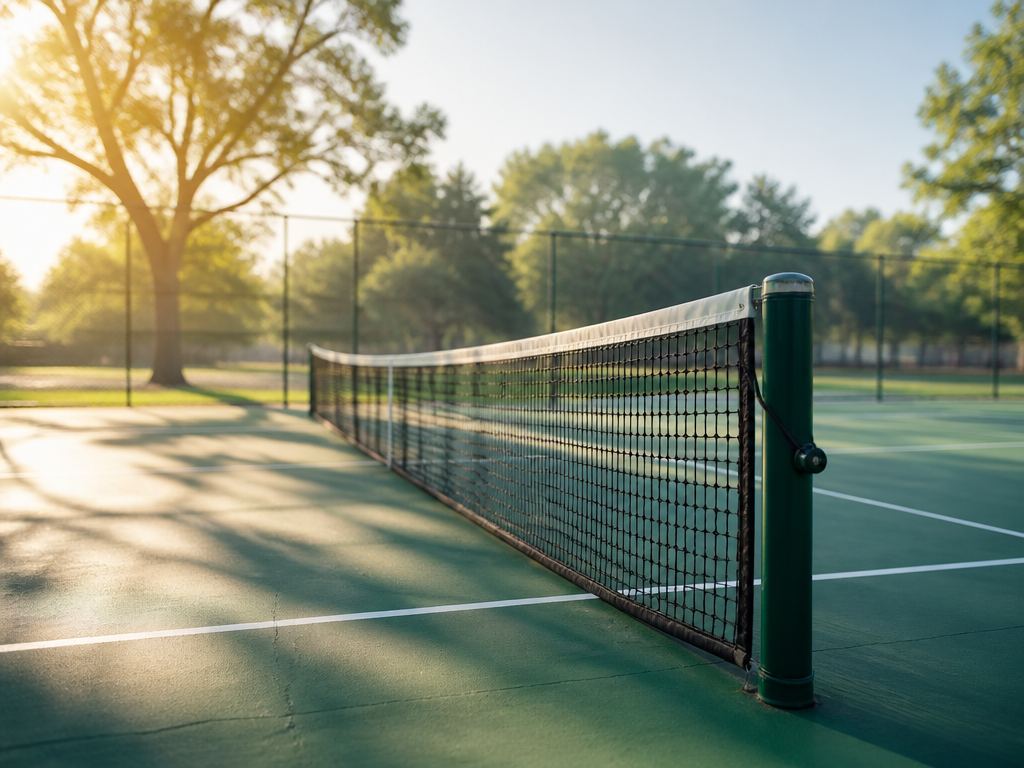
If you have watched tennis for years without ever holding a racquet, you have probably absorbed three beliefs about taking it up: that you are too old, that it costs too much, and that you lack the coordination. Tennis for beginners is more accessible than any of those beliefs suggest — and the useful thing to notice is that all three are inherited opinions with surprisingly thin sources. We are not going to tell you the sport is effortless. We are going to trace where the intimidation came from, because once you see the source, the wall looks more like a low fence.
This is the honest version. Beginner tennis has real difficulties. But the difficulties are not the ones the reputation advertises.
Where the Intimidation Came From
The image of tennis as a closed, expensive, technically punishing sport is not invented. It is a memory of conditions that were once true and have largely stopped being true.
Three historical facts built the belief:
- The club era. For much of the twentieth century, the most visible tennis happened behind membership fees and dress codes. If the only courts you ever saw were private, the sport looked private.
- The wooden-racquet era. Until the late 1970s, racquets were small-headed, heavy, and unforgiving. The sweet spot — the zone on the strings that returns a clean shot — was roughly the size of a fist. Miss it and the ball sprayed. Learning genuinely was harder, because the equipment punished imprecision.
- The broadcast filter. Television shows professionals. It does not show the doubles foursome of retirees rallying at half pace on a Tuesday morning, which is what most actual tennis looks like.
Each of those is a real source. The problem is that the belief outlived its source. Public courts now outnumber private ones in most towns. Racquet heads have grown by more than fifty percent. And the sport you see on TV is the top one ten-thousandth of the people playing it. The reputation is a photograph of a country that has moved.
Barrier One: "I'm Too Old to Start"
This is the belief with the clearest traceable origin, and the clearest misapplication.
The "start young or never" idea comes from junior development — the pipeline that produces touring professionals. That pipeline is real and it is brutal. Elite players typically begin between ages four and seven, because the technical and neurological windows for world-class racquet skill do matter, and because the competition is global. If your goal is the professional tour, yes, you are almost certainly too late.
But that is a claim about producing champions, not about playing tennis. The two got blurred. Recreational tennis makes no such demand. The sport scales down gracefully: you can rally, play a relaxed point, and get a genuine workout at a pace your body sets. The motions are large and rhythmic rather than explosive — closer to a brisk swimming stroke than a sprint.
There is also a quiet advantage to learning later. Adults can be taught with explanation; a six-year-old learns by imitation and repetition. An adult who understands why the racquet face should be slightly open can correct a shot in one sentence. Whatever you lose in reaction time, you partly recover in comprehension. The honest caveat: if you have a joint condition or have been sedentary for years, start with a few weeks of light movement first, and tell a coach. That is a medical note, not a tennis verdict.
Barrier Two: "It's Too Expensive"
The cost belief is a fossil of the club era, and the numbers no longer support it.
Here is what entry actually costs, in plain ranges:

| Item | Realistic beginner spend |
|---|---|
| Court access (public) | Free to about £8 per hour |
| A serviceable beginner racquet | £30–£70 new; less used |
| A can of balls | £4–£8 |
| Shoes (court-soled) | £30–£60, often gear you own |
| Optional: a group lesson | £8–£20 per session |
You can stand on a court with a usable racquet and a can of balls for well under £80, and the recurring cost after that is roughly the price of a coffee per outing. The expensive version of tennis — private membership, a coach on retainer, a new £250 racquet every season — exists, but it is a choice at the top of the range, not the cost of entry. Buy a racquet meant for beginners, not the model your favourite professional endorses. The endorsement racquet is tuned for someone who already swings fast; in your hands it will feel like a plank.
Barrier Three: "I'm Too Uncoordinated"
This is the most interesting one, because the belief is mostly a memory of the equipment.
When the sweet spot was the size of a fist, hand-eye coordination was the whole game at the start. People who tried tennis with a wooden racquet and quit "because they had no coordination" had in fact met a tool designed for experts. Modern oversized racquet heads — 100 to 115 square inches against the old 65 — enlarged the sweet spot enormously. The margin for error you have on contact today is several times what it was for the generation that decided they "couldn't do it."
What this means in practice: a complete beginner using a forgiving racquet and a slower ball will make clean contact within the first session more often than not. Not good contact — clean contact, the ball going roughly where intended. That early success is the thing that keeps people coming back, and the equipment now hands it to you far sooner than the reputation expects.
The genuine difficulty is elsewhere, and it is worth naming so you are not blindsided: the serve takes time, and footwork — getting your feet to the ball early — is the skill that separates frustrating sessions from satisfying ones. Coordination is not your obstacle. Patience with footwork is.
Who This Is For, and Who It Isn't
This is for you if you want a sport you can play into your seventies, you can give it an hour a week, and you are willing to be visibly mediocre for a month while your feet learn what to do.
This is not for you if you want fast results without instruction, or if you are unwilling to play with people better than you — which, early on, is everyone, and is the fastest way to improve.
Evidence Grade
For the central claim — that age, cost, and coordination are weaker barriers to beginner tennis than the sport's reputation implies — we grade the evidence Moderate. The cost figures are directly verifiable. The equipment history (racquet head size, sweet spot) is well documented. The "too old" and "too uncoordinated" claims rest on a sound distinction between elite development and recreational play, but we have no controlled study measuring adult beginner retention by starting age, and we will not pretend one exists.
One Thing to Try This Week
Find a public court near you — most council parks list theirs online — and book or just walk on during a quiet weekday hour. Borrow or buy one beginner racquet and a single can of balls. Do not play a match. Do not keep score. Stand a few feet from a wall and hit the ball against it, letting it bounce once, for fifteen minutes. That is the whole assignment. It costs almost nothing, no one is watching, and it will tell you more about whether tennis suits you than any article can.