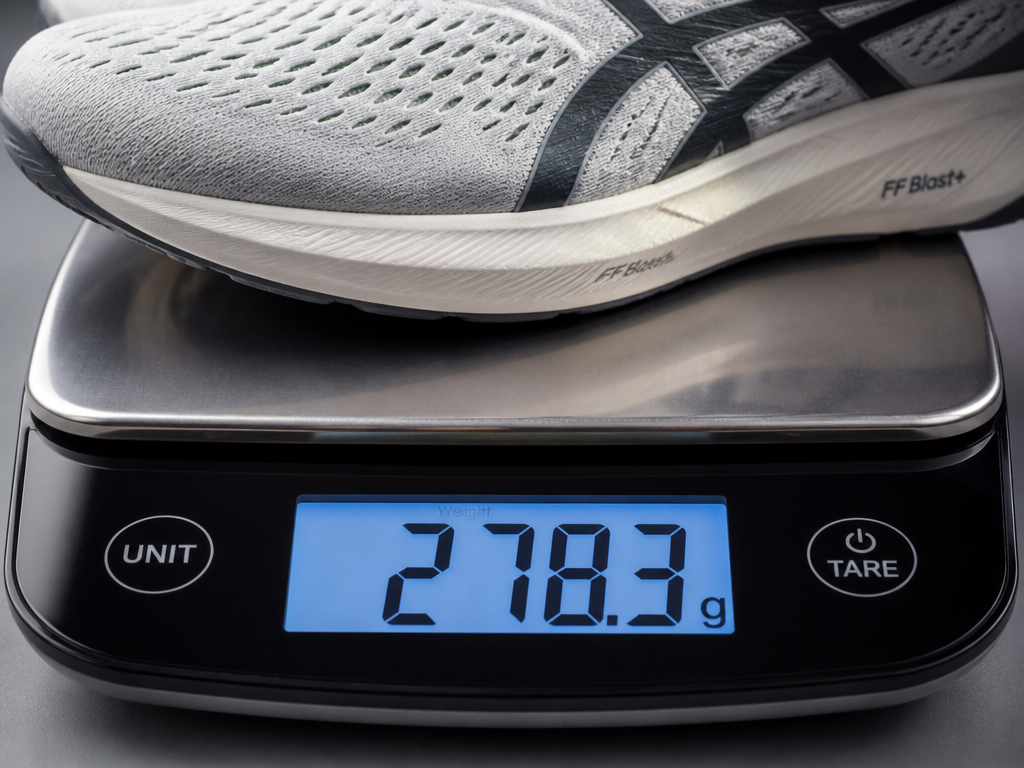
The first thing we did was stop reading the brochure and pull the number. Nike positions the Air Zoom GP Turbo as a shoe built for aggressive court movers — the marketing leans on Frances Tiafoe's explosive, baseline-to-net game — and the word "Turbo" does a lot of work before you ever lace one up. So we went looking for the one figure that should anchor any shoe sold on speed: weight. The men's pair is widely listed at roughly 13.4 ounces (about 380 grams) for a US size 9 across retailer spec sheets. For a shoe whose name is a synonym for fast, that is not a light number. It is, in fact, heavier than several shoes marketed on comfort rather than quickness.
That single mismatch is the whole story in miniature, and it shapes our verdict.
The verdict, in one sentence: This tennis shoe review concludes the Air Zoom GP Turbo is an excellent hard-court comfort shoe wearing a speed shoe's marketing — buy it for the cushioning and stability, not for the lightness its name promises.
How we evaluated
We did not play in these shoes, and we are not going to pretend otherwise. This piece is a synthesis. Our job is to read the evidence carefully, say where each figure comes from, and weigh the sources honestly so you can decide before you spend the money.
Here is what we drew on, and how much weight we gave each:
- Published specifications from Nike and major tennis retailers — weight, drop, outsole material, upper construction, listed cushioning tech. These are the most reliable hard numbers, with one caveat: weight and stack figures are usually stated for a single reference size (typically US 9, men's) and manufacturers rarely publish their measurement method.
- Nike's own marketing claims — the Zoom Air unit, the "aggressive mover" positioning, the durability promises. We treat these as claims to be checked, not facts.
- Independent tester reviews from specialist tennis-gear reviewers and YouTube playtesters who bought or were sent the shoe and logged on-court impressions. These are the closest thing to field data we can cite, though they are individual experiences, not controlled trials.
- Owner feedback aggregated from retailer review sections and forums — useful for spotting patterns (sizing, durability complaints) that a single reviewer might miss, and useless for anything requiring precision.
Where these sources agree, we say so with confidence. Where they diverge — and on ventilation they genuinely do — we flag the split rather than paper over it. Where a number is manufacturer-stated and not independently verified, we label it that way.
The claim, and what the spec sheet actually says
Nike's pitch for the GP Turbo is built around a no-compromise idea: a shoe responsive and durable enough for a player who changes direction violently and often, but plush enough that you do not pay for it in your joints. The hero technology is a full-length Zoom Air unit embedded in the midsole — the same air-bag-and-tensile-fiber cushioning Nike uses across its performance lines — paired with foam above it.
The tension shows up the moment you set the marketing next to the spec sheet. A shoe sold on quickness lists at roughly 13.4 oz (size 9, men's, per retailer listings). For context, that is comparable to or heavier than several shoes Nike and its competitors explicitly market as stability-and-comfort models rather than speed models. The published heel-to-toe drop sits in the typical tennis range (most listings put it around 8–10 mm, though Nike does not foreground this number), and the outsole carries Nike's standard hard-court durability rubber with a six-month outsole durability guarantee on many regional Nike storefronts — itself a tell that Nike expects this to be a high-mileage shoe rather than a disposable racing flat.
So the spec sheet quietly contradicts the name. That is not a scandal; plenty of good shoes are misnamed. But if you are choosing based on the word "Turbo," the published weight is the first thing you should look at.
Comfort and cushioning: where the shoe earns its price
This is the GP Turbo's strongest, least disputed area, and it is where the marketing and the field reports line up.
The full-length Zoom Air unit is not a foam gimmick — it is a pressurized air bag with internal tensile fibers that compress and snap back. The mechanism matters here: a full-length unit (rather than a heel-only pod) spreads cushioning across the entire footstrike, which is why the consensus among independent reviewers is that the GP Turbo feels notably plush underfoot from the first wear, with little of the break-in stiffness some performance shoes demand. Reviewers who logged extended hard-court sessions repeatedly describe the ride as forgiving on the knees and lower back — exactly what you want for long doubles afternoons or back-to-back recreational matches.
The trade-off baked into that air unit is feel. A full-length Zoom Air bag puts a layer of pressurized cushioning between your foot and the court, and several testers note a slight loss of "court connection" — the precise sense of where your foot is during a hard plant. That is the standard cost of plush cushioning and it is not unique to this shoe, but it is worth naming because it is the flip side of the same feature people praise.
Our read: On comfort, the evidence is consistent across published specs, Nike's claims, and independent reviews. This is a genuine comfort shoe, and a good one.
Weight and responsiveness: the central tension
Here is where the name and the numbers fight.
At ~13.4 oz (manufacturer/retailer-stated, size 9), the GP Turbo is not a light shoe, and independent testers feel it. The recurring note in playtester reviews is mild surprise — the shoe is marketed for explosive, direction-changing movers, yet on quick recovery steps and sharp lateral pushes it reads as a stable, planted shoe rather than a snappy one. Several reviewers describe it as feeling its weight during fast footwork drills and quick first steps, even while praising how locked-in and secure it feels once planted.
This is the honest crux of the matter. The full-length Zoom Air and the durable outsole and the supportive upper all add grams. You cannot have maximum cushioning, maximum durability, and minimum weight in the same shoe — physics and materials science do not allow it — and Nike chose cushioning and durability. That is a defensible engineering choice. It is just not the choice the name advertises.
If you are a player whose game is built on speed and you are shopping for a shoe to make you feel quick, the published weight is a reason to hesitate. If you are a player who values feeling stable and protected over feeling fast, the same weight is a feature.
Stability and lateral support
The flip side of the weight is genuinely good stability, and this is where the design coheres.
The GP Turbo uses a supportive, structured upper with internal reinforcement and a midsole geometry built to keep the foot centered during lateral loading. Independent reviewers consistently rate it well for lateral stability — the shoe holds the foot during hard direction changes without the heel slipping or the foot rolling over the edge of the midsole, which is a common failure point in plusher shoes. The weight that hurts quickness helps here: a heavier, more structured platform resists deformation under load.
For recreational-to-intermediate players who are not yet making elite-level cuts but want to feel secure when they lunge for a wide ball, this is reassuring. For players with a history of ankle rollovers, the structured build and the planted feel are arguably a bigger selling point than anything Nike puts on the box.
Ventilation: where the sources split

This is the one criterion where we cannot give you a clean answer, and we would rather say that than fake consensus.
Nike builds the GP Turbo with mesh panels for airflow, and on paper it is constructed to breathe. But the upper is also reinforced and supportive — and reinforcement and ventilation pull in opposite directions. Among independent testers, the reports diverge: some found the shoe adequately cool through normal sessions, while others specifically noted that the foot ran warm on hot days, citing the denser, more structured upper as the likely reason. Owner reviews show the same split, with a recurring minority complaint about heat retention in warm conditions.
We read this as a real but conditional weakness. The shoe is probably fine in moderate temperatures and indoors. In genuine heat, the structured upper that gives you stability may also trap warmth, and a meaningful subset of wearers notice it. If you play summer hard-court tennis in a hot climate, treat ventilation as an open question and, if you can, try the shoe in conditions close to how you'll use it.
Durability and toe protection
This is an area where Nike's claim is backed by something concrete: the six-month outsole durability guarantee offered on many Nike storefronts. A manufacturer does not put a six-month warranty on an outsole it expects to wear through, so the guarantee is itself evidence of design intent, and independent reviewers generally report the outsole rubber holding up well on abrasive hard courts.
The area worth watching is the upper and toe. Independent reviewers — particularly those who drag their toe on serves and aggressive forehands — have flagged the toe-drag zone and upper materials as something to monitor over a season rather than a guaranteed strong point. This is not a reported failure so much as a "watch this area" note, and it is the kind of thing a synthesis can surface but cannot resolve without long-term wear data we do not have. If you are a known toe-dragger, factor that in.
Fit and sizing
The consensus on fit is more settled than you might expect. Reviewers and owners broadly describe the GP Turbo as running close to true-to-size to very slightly long, with a secure midfoot lockdown and a reasonably accommodating toe box. The most common piece of crowd-sourced advice is that players between sizes or with narrower feet should consider going down a half size, based on the pattern in owner reports rather than any one tester's foot.
We will be plain about the limit here: fit is the single hardest thing to evaluate from a desk. Foot shape is individual, and no amount of reading reviews substitutes for putting the shoe on. Use the "slightly long, lock-down is good" consensus as a starting hypothesis, not a guarantee.
How it compares
We lined the GP Turbo up against two shoes recreational players cross-shop most often: a lighter, speed-oriented option and a comfort-stability peer. The figures below are manufacturer/retailer-stated weights for the men's size-9 reference, not weights we measured.
| Criterion | Nike Air Zoom GP Turbo | Lightweight speed shoe (e.g. Nike Vapor / Vapor Pro class) | Comfort-stability peer (e.g. Asics Gel-Resolution class) |
|---|---|---|---|
| Stated weight (≈ size 9 M) | ~13.4 oz / 380 g | ~11.5–12 oz class | ~13.4 oz / 380 g class |
| Primary strength | Cushioning + stability | Quickness, court feel | Stability, durability |
| Cushioning style | Full-length Zoom Air, plush | Lower, firmer, responsive | Gel + foam, supportive |
| Court feel | Slightly muted | Direct, connected | Moderate |
| Best for | Comfort-first hard-court players | Fast, aggressive movers | Stability-first all-court players |
The takeaway from the grid: the GP Turbo's weight is essentially in the comfort-stability bracket, not the speed bracket — which is exactly the point. If quickness is your priority, the lighter Vapor-class shoes are the honest match for that goal, and the published weights say so. If cushioning and a planted feel are what you want, the GP Turbo competes directly with the established comfort-stability shoes, and its full-length Zoom Air gives it a real, differentiated argument on plushness.
Who this shoe is for
Buy the Air Zoom GP Turbo if:
- You prioritize cushioning and joint comfort over a feather-light feel — the full-length Zoom Air is the genuine article and the comfort reports are consistent.
- You want a stable, planted, supportive platform for lateral movement, especially if you've had ankle or rollover worries.
- You play long sessions — doubles, social ladders, back-to-back matches — where comfort over time beats peak quickness.
- You value durability and like that Nike backs the outsole with a six-month guarantee.
Who should look elsewhere
Skip it, or at least look harder, if:
- Your game lives on speed and quick first steps. The ~13.4 oz stated weight is not what a speed shopper should be reaching for, regardless of the name. Lighter Vapor-class shoes are the honest fit.
- You play in real heat. Ventilation is the criterion where reviewers genuinely disagree, with a notable minority reporting a warm-running upper. Treat it as an open risk in hot climates.
- You drag your toe hard on serves. The toe and upper are a "monitor this" zone in the reviews rather than a proven strength.
The screenshot line: The GP Turbo is the best comfort shoe Nike makes that's marketed as a speed shoe — and that mismatch is the only thing you really have to decide about.
Evidence grade
For our central claim — this is a comfort-and-stability shoe rather than the speed shoe its marketing implies — we grade the evidence Strong on the spec side, Moderate overall.
The weight figure is consistent across retailer listings and directly contradicts the speed positioning; that part is strong. The comfort and stability ratings are corroborated across published specs, Nike's own description, and multiple independent reviewers; also strong. The ventilation weakness is Moderate-to-Weak because the field reports split and depend heavily on conditions and individual sweat rates. The durability and toe-wear concern is Weak in the sense of being an early-watch flag, not a documented failure rate. Fit guidance is Moderate — a consistent crowd pattern, but no substitute for trying the shoe.
What this review couldn't settle
We will close where we are honest about the gap. A desk synthesis can tell you what a shoe weighs, what its cushioning is built from, where the reviewers agree, and where they fight. It told us, clearly, that this is a comfort shoe in a speed shoe's clothing, and that the name is the most misleading thing about it.
What it could not settle is the part that only your own feet decide. We could not resolve the ventilation question, because heat performance depends on your climate, your socks, and how much you sweat — and the testers who disagreed were all telling the truth about their own conditions. We could not verify the toe-durability concern, because that needs a season of wear we do not have. And we could not tell you whether the slightly muted court feel from the full-length Zoom Air will bother you, because court connection is among the most subjective things in tennis footwear.
If you want to close those gaps, here is where to look next: try the shoe on in the temperature you actually play in, walk and pivot in it on a hard surface before you commit, and read the longest-term owner reviews you can find — the six-month and one-year updates, not the first-week impressions — specifically for toe-wear and upper photos. That is the evidence we couldn't generate from a desk, and it's exactly the evidence that will tell you whether the comfort shoe with the fast name is the right shoe for your game.