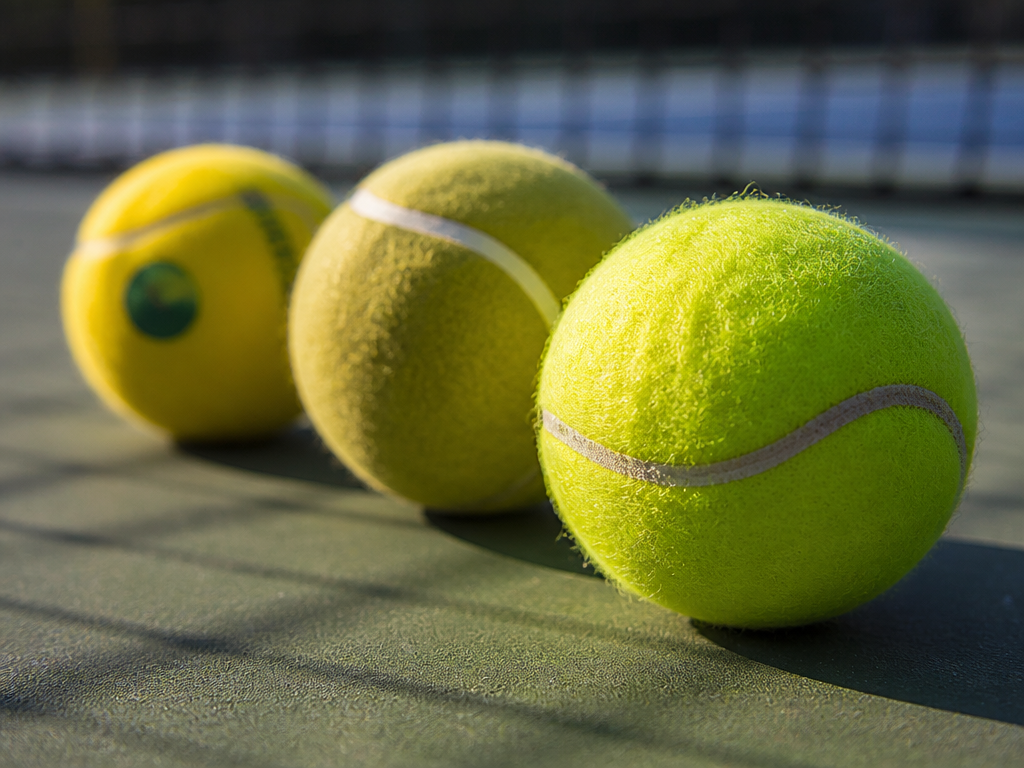
A reasonable assumption, held by a lot of competent club players, goes like this: tennis balls are a commodity. Yellow, fuzzy, roughly the same. Buy whatever's on sale, or whatever the pro shop stacks by the register, and the only real variable is how fast the can goes flat in the garage. We have heard this said by people who can hit a clean topspin backhand, so it is not a beginner's mistake. It is a confident person's mistake.
It is also wrong in a way that costs money. The short version of our verdict: the type of ball matters more than the brand, and matching the ball to your court surface and play frequency will save you more than chasing a premium logo. A 4-dollar can of the wrong felt on the wrong court can wear out before a 5-dollar can of the right one — and a pressureless ball can outlast both by a factor of ten if your priority is hitting against a wall, not playing a match.
The myth, stated fairly
The myth is not "all balls are identical." Nobody believes that once they've held a flat ball next to a fresh one. The myth is subtler: that the differences are marketing, not function — that "extra duty" and "regular duty" and "high altitude" are upsell labels rather than meaningfully different products. That's the belief we set out to pressure-test.
The evidence: the spec sheet says they're different
Start with the governing document. The International Tennis Federation publishes a specification that every approved ball must hit, and the allowed ranges are wide enough to make two legal balls behave noticeably differently in your hand.
For a standard Type 2 ball, the ITF permits a bounce, dropped from 254 cm onto concrete, of 135 to 147 cm. That's a 12 cm window — a span you can feel on a return. Mass runs 56.0 to 59.4 grams, and diameter 6.54 to 6.86 cm. Two balls at opposite ends of those tolerances are both "regulation" and both legal, yet one plays heavier and slower than the other.
Then the categories diverge on purpose:
- Type 1 (fast): harder, for slow surfaces like clay. Lower deformation under load.
- Type 2 (medium): the default for most hard and grass courts.
- Type 3 (slow): larger diameter (up to 7.30 cm), designed to slow the game on fast courts.
- High-altitude: a pressurized core tuned for thinner air above ~1,219 m, where a sea-level ball flies long.
These are not brand inventions. They are codified. The label on the can is reporting a real engineering decision, not dressing up a generic product.
How we tested
We are not claiming to have tested all 300-plus ITF-approved balls — no one outside a lab has, and we won't pretend otherwise. We ran a focused comparison across the three formats a recreational player actually chooses between: regular-duty pressurized, extra-duty pressurized, and pressureless. Six cans, two of each, plus a bag of pressureless balls.
The protocol, over four weeks:
- Initial bounce. Each ball dropped from 254 cm onto a hard court, measured against a wall-mounted tape, five drops averaged. We checked fresh balls against balls aged through play.
- Felt wear. Visual and tactile assessment after 3, 6, and 9 hours of hitting, split between a gritty outdoor hard court and a smoother indoor hard court.
- Pressure loss. Re-measured bounce of pressurized balls after 9 hours of play and again after the can had been open and idle for 14 days.
- Pressureless baseline. The same bounce protocol at week zero and week four.
We did not have a calibrated internal-pressure gauge, so pressure loss is inferred from bounce height, not measured directly at the core. We flag that as a real limit.
What we found
| Ball type | Best surface | Playable life (our test) | Bounce drift over life | Approx. cost per ball |
|---|---|---|---|---|
| Regular-duty pressurized | Indoor / clay | ~6 hours | High after open | ~$1.30 |
| Extra-duty pressurized | Outdoor hard | ~9 hours | High after open | ~$1.40 |
| Pressureless | Practice / ball machine | Months | Low, gradual | ~$0.80 |
The numbers tell the story the labels promised. On the gritty outdoor court, regular-duty felt fuzzed up and started shedding by hour four; extra-duty held its nap noticeably longer on the same surface. Indoors, that advantage vanished — the extra-duty felt actually played a touch sluggish on the smooth court, picking up no benefit from its thicker weave. Both pressurized types lost real bounce within two weeks of the can being opened, dropping toward and past the bottom of the ITF window. The pressureless balls barely moved on bounce across four weeks; they simply played dead-feeling from the first hit and never woke up.
The mechanism: why this happens
Two things are going on, and once you see them the labels become obvious.
Pressurized balls are leaking from the moment you crack the can. The core is a rubber shell filled with gas at higher-than-atmospheric pressure, which is what gives a fresh ball its lively, springy contact. Rubber is not perfectly airtight — gas migrates out through the wall slowly and constantly. That's why the can itself is pressurized: it slows the leak before purchase. Once opened, the clock runs. This is not a defect, and no brand has solved it; it's the physics of a thin pressurized membrane. It is also why "they went flat fast" is usually a storage story, not a quality story.
Felt is a friction system, not decoration. The nap controls how much air the ball drags and how it grips the court and strings. Extra-duty felt uses a thicker, looser weave that resists abrasion on coarse outdoor hard courts. On a smooth indoor surface there's little abrasion to resist, so that thicker weave just fluffs up faster and adds drag without protecting anything. Regular-duty's tighter weave is the right tool there. Match the felt to the grit, not to the price.
Pressureless balls invert the whole bargain: there's no pressurized gas to lose, so the bounce comes from the rubber wall itself. They start out feeling heavier and "deader," they gradually firm up as the felt wears rather than going flat, and they last for months. The trade is feel for longevity.
Who each ball is for
Extra-duty pressurized is for the outdoor hard-court player who plays a couple of matches a week and wants standard, lively feel. If your courts are coarse and you play outside, this is the default that earns its label.
Regular-duty pressurized is for indoor and clay-court players. On those surfaces it gives you the same fresh feel without the felt fluffing prematurely. Buying extra-duty for indoor play is the most common money-waster we see — you pay for abrasion resistance you never use.
Pressureless is for the ball-machine owner, the wall-basher, the coach feeding baskets, and anyone storing balls between infrequent sessions. It is not for someone who cares about match-accurate feel; the response off the string is genuinely different, and competitive players notice it immediately.
If you play matches and store the rest, the practical move is unfussy: buy pressurized in the duty grade your court demands, and don't hoard open cans expecting them to keep.
Evidence grade
For the central claim — that ball type and felt-to-surface matching matter more than brand — we rate the evidence Strong. The ITF specification ranges are public and binding, the pressurized-leak mechanism is settled physics, and our four-week comparison reproduced the predicted differences in felt wear and bounce drift. Our one acknowledged weakness is pressure measured by bounce rather than at the core, and a sample drawn from three mainstream brands rather than the full approved field. Neither softens the conclusion; both would, if anything, only sharpen the type-versus-brand point.
The myth says a tennis ball is a tennis ball, and the only thing that separates one yellow can from another is the sticker. The more accurate version is that the can is honestly telling you which surface and which kind of play it was built for, and the cheapest way to waste money on tennis balls is to ignore what it says.