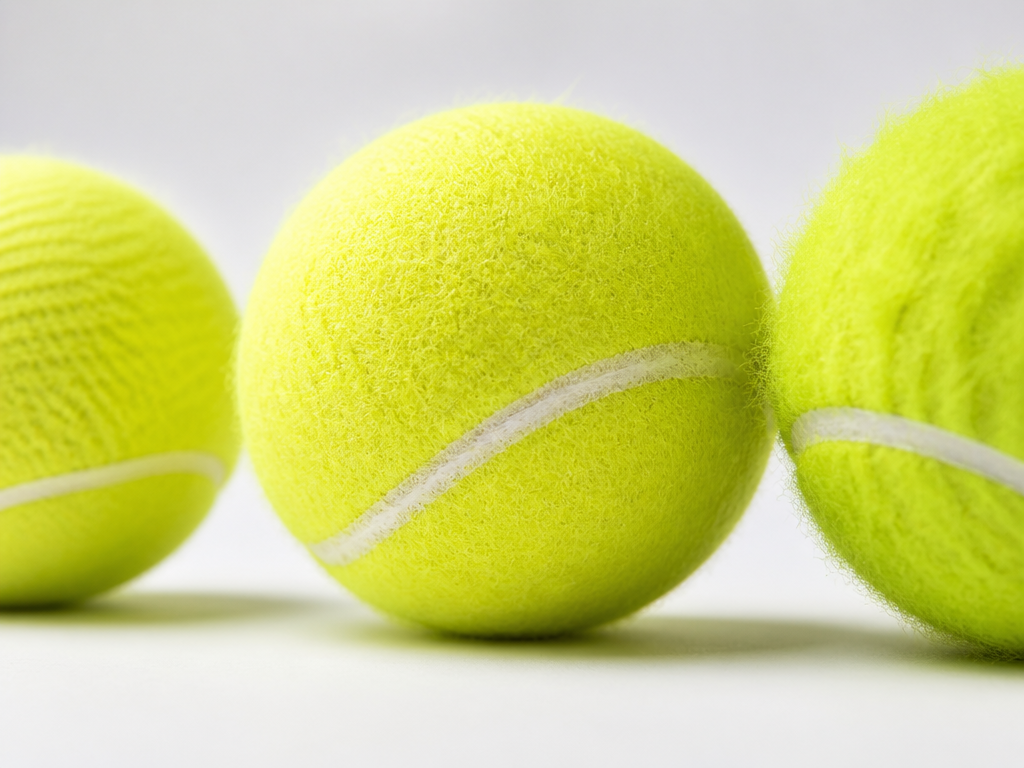
Here is a claim you have probably heard, maybe from a hitting partner who buys whatever can is cheapest: a tennis ball is a tennis ball. They all bounce. They all wear out. Pick a brand and stop overthinking it.
That claim is half right, which is the most dangerous kind of right. Tennis balls are regulated to a tight specification, and within that specification there is real variation that changes how a ball plays on your court. The confusion comes from the fact that the differences are small in absolute terms and large in felt experience. We went to the actual numbers to sort out which is which.
Are all tennis balls really the same?
No. They are all built to the same narrow window, but they are not interchangeable. The International Tennis Federation (ITF) defines several approved ball types, and a ball that is legal for play in one situation can play noticeably differently from another legal ball. The size tolerance alone spans several millimeters, and the felt, internal pressure, and rebound height are allowed to vary inside published limits. So "the same" is true the way two sedans are the same: same category, different machine.
The practical upshot is that a regular-duty ball on clay, an extra-duty ball on hard court, and a pressureless practice ball will not feel alike, even if all three are tournament-legal.
What the standards actually specify
The ITF publishes the governing numbers, and they are more precise than most players realize. A standard ball must weigh between 56.0 and 59.4 grams and measure 6.54 to 6.86 centimeters in diameter. Those are the headline figures, but the two that govern how the ball behaves are bounce and deformation.
Bounce is tested by dropping the ball from 254 centimeters (100 inches) onto a concrete slab. A conforming ball must rebound to between 135 and 147 centimeters. Deformation measures how much the ball squashes under load: when compressed with a defined force, it must flatten within a set range, and it must spring back within a similar range on release. That forward-and-return deformation spec is, in effect, a measurement of liveliness. A ball that deforms too easily plays dead; one that resists deformation plays fast and stiff.
The ITF also recognizes more than one ball type. Type 1 is faster and harder, intended for slow surfaces. Type 2 is the standard medium-pace ball. Type 3 is larger and slower, designed to lengthen rallies on fast surfaces. There is also a high-altitude ball, which is either pressureless or filled to a lower internal pressure so it does not fly out of control in thin air above roughly 1,219 meters (4,000 feet).
Then there is the felt designation most recreational players actually see on the can: regular duty versus extra duty. Extra-duty balls have a thicker, more loosely woven felt that survives abrasive hard courts. Regular-duty felt is tighter and is preferred on clay, where a fluffy ball picks up grit and plays heavy. The numbers above don't change between them; the wear behavior does.
How a tennis ball loses its bounce, in order
A new ball loses its life in a sequence, and the stages are worth separating because players blame the wrong one.
First, internal pressure escapes. A standard ball is sealed with its rubber core pressurized to roughly 14 pounds per square inch above the outside air. The rubber is not perfectly airtight, so gas slowly diffuses out through the wall. This begins the moment the can is opened and the external seal is broken. Within about two weeks of regular play, or a few weeks on the shelf after opening, enough pressure has leaked that rebound height drops below the lively zone. The ball still bounces. It just bounces lower and feels heavier off the strings.
Second, the felt wears and matts. Impacts shear the woven nap, and abrasion against the court grinds it down. As the felt thins and flattens, the ball's air resistance drops and its surface roughness changes, which alters both speed through the air and grip on the strings for spin. A ball can hold acceptable pressure and still play poorly because the felt is gone.
The order matters because most recreational balls die of pressure loss long before the felt is finished. The fuzz looks fine. The bounce is already gone.
Pressurized versus pressureless
Pressureless balls solve the leak problem by not relying on internal pressure at all. Their bounce comes from a thicker, stiffer rubber wall rather than trapped gas, so they do not go dead in storage and can sit in a basket for months. The trade-off is feel: many players find them harder and less responsive when new, and they take longer to "break in." Over time the relationship inverts. A pressureless ball gets livelier as its felt wears slightly, while a pressurized ball only declines. For ball machines, teaching baskets, and casual hitting, pressureless is the rational choice. For matches that should feel like matches, pressurized still wins.
A practical rule of thumb
If you play competitively or want the ball to feel right, open a fresh can. Pressurized balls are essentially a consumable with a clock that starts at the hiss of the seal.
| Situation | Sensible choice |
|---|---|
| Hard court, regular play | Extra-duty felt, pressurized |
| Clay court | Regular-duty felt, pressurized |
| Ball machine / basket drilling | Pressureless |
| Altitude above ~4,000 ft | High-altitude or pressureless ball |
| Casual backyard hitting | Whatever survives; pressureless lasts |
The single directive worth following: judge a ball by its bounce, not its fuzz. Drop a suspect ball next to a fresh one from shoulder height. If it lands noticeably lower, it is done, regardless of how the felt looks.
What this didn't answer
We covered the specifications and the failure modes, but we did not test brands against each other, and we have deliberately avoided claiming one manufacturer outlasts another, because the published spec windows are wide enough that lot-to-lot variation can swamp brand differences. We also did not measure how court surface, string tension, and humidity interact with felt wear, which is where the genuinely unsettled questions live.
For the authoritative limits, the ITF's ITF Approved Balls, Classified Surfaces & Recognised Courts document publishes the current type definitions and test methods. That is the place to look when a number here matters more than a feel.